
A Few Days Around Madrid and Several Centuries of History
Spain always feels cinematic.
Maybe it's the golden light. Maybe it's the old stone cities, or the landscapes that look exactly the way you imagined Europe would look as a child. Either way, the feeling hits you the moment you cross the border and doesn't really let go.
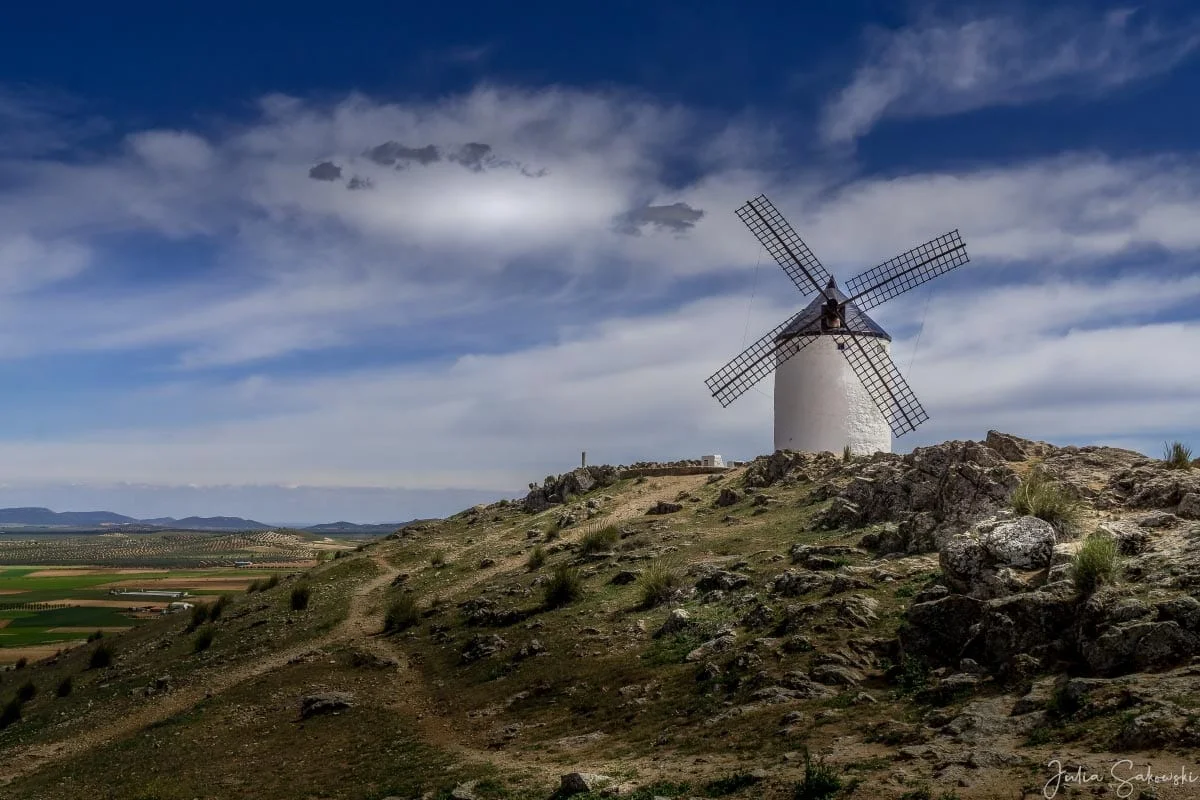
We drove toward Madrid from Andalusia, crossing the wide plains of La Mancha under a punishing summer sun. Somewhere near the small town of Consuegra, the famous windmills appeared on the hilltops — the same ones Don Quixote once charged at with heroic determination and complete madness.
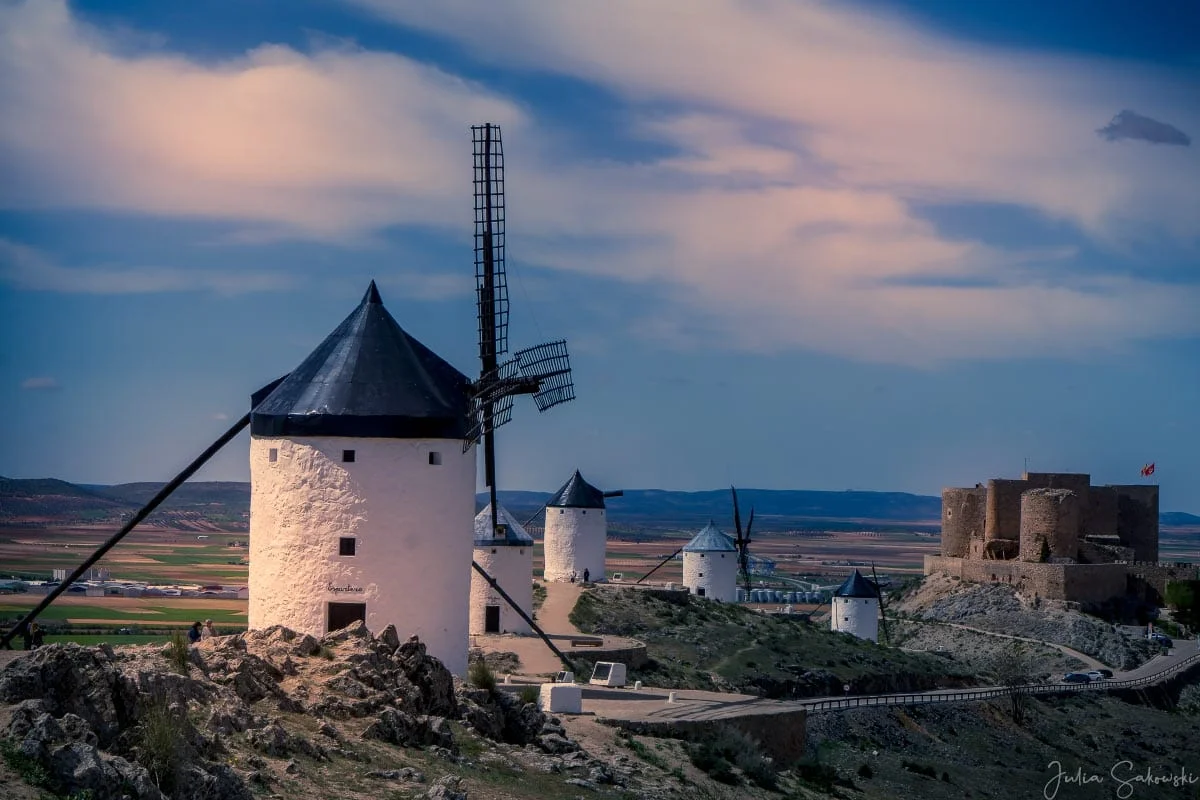
Naturally, we stopped.
Standing there in the heat and dust, it became obvious how Cervantes came up with the whole story. At a certain angle, in a certain light, the windmills really do look like giants.
Madrid
Madrid hits you immediately. Not polished or quietly elegant like some European capitals — louder than that. Warmer. Streets are full of people long after sunset. Tiny cafés spilling onto sidewalks. Music drifting from somewhere you can't quite locate.
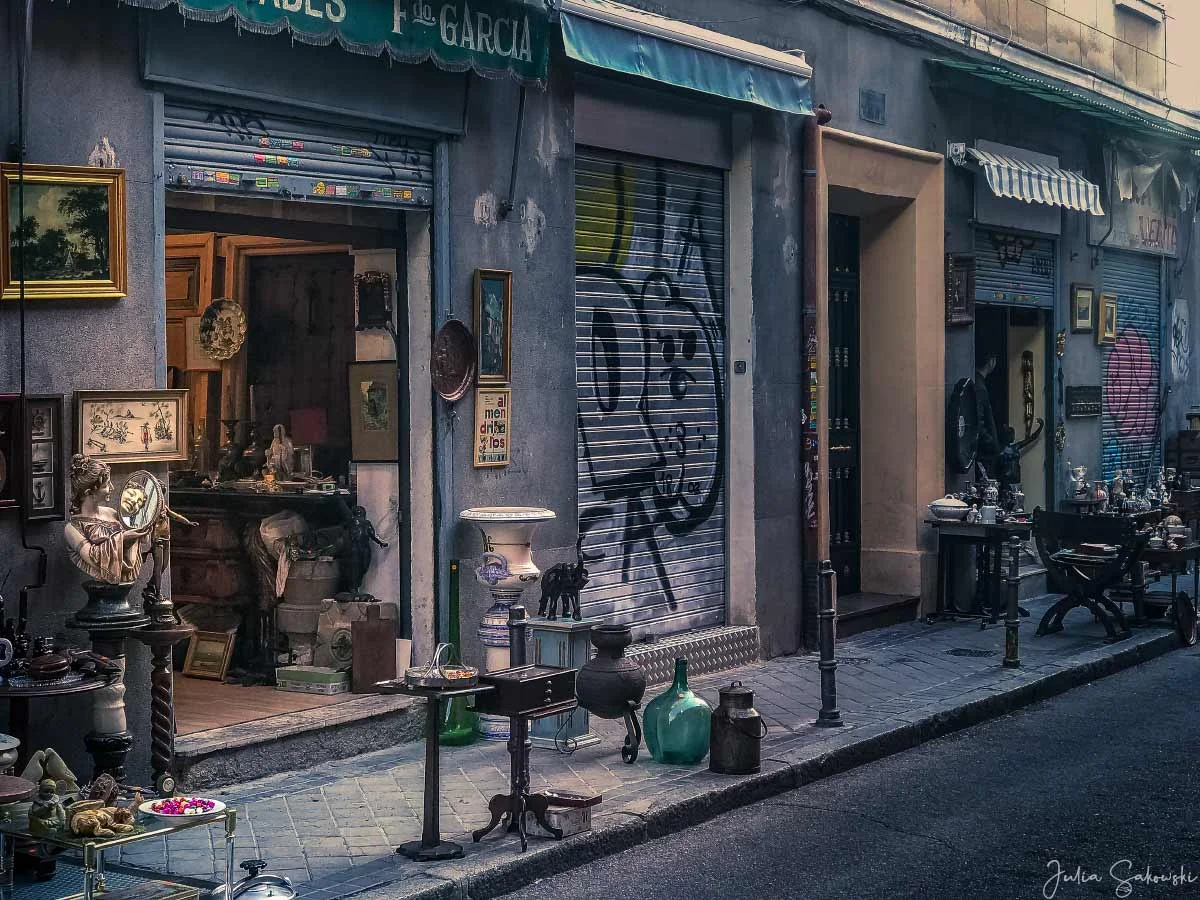
One morning we wandered through El Rastro, Madrid's famous flea market. My friend Natasha and I were gone within minutes — lost in a maze of vintage lamps, porcelain figurines, and furniture from other eras. My husband Alex, bless him, is completely immune to the pull of antique markets. He waited patiently for approximately thirty seconds before steering us toward the Prado.
Thank you, Alex.
The Prado doesn't feel like a museum. It feels like someone opened a portal to another century. An entire floor of Goya, Velázquez, El Greco, Rubens, Titian — paintings you've seen in books your whole life suddenly appearing right in front of you, enormous and alive. And then there's Bosch's Garden of Earthly Delights, which stops you completely. Your brain eventually gives up trying to absorb it all.
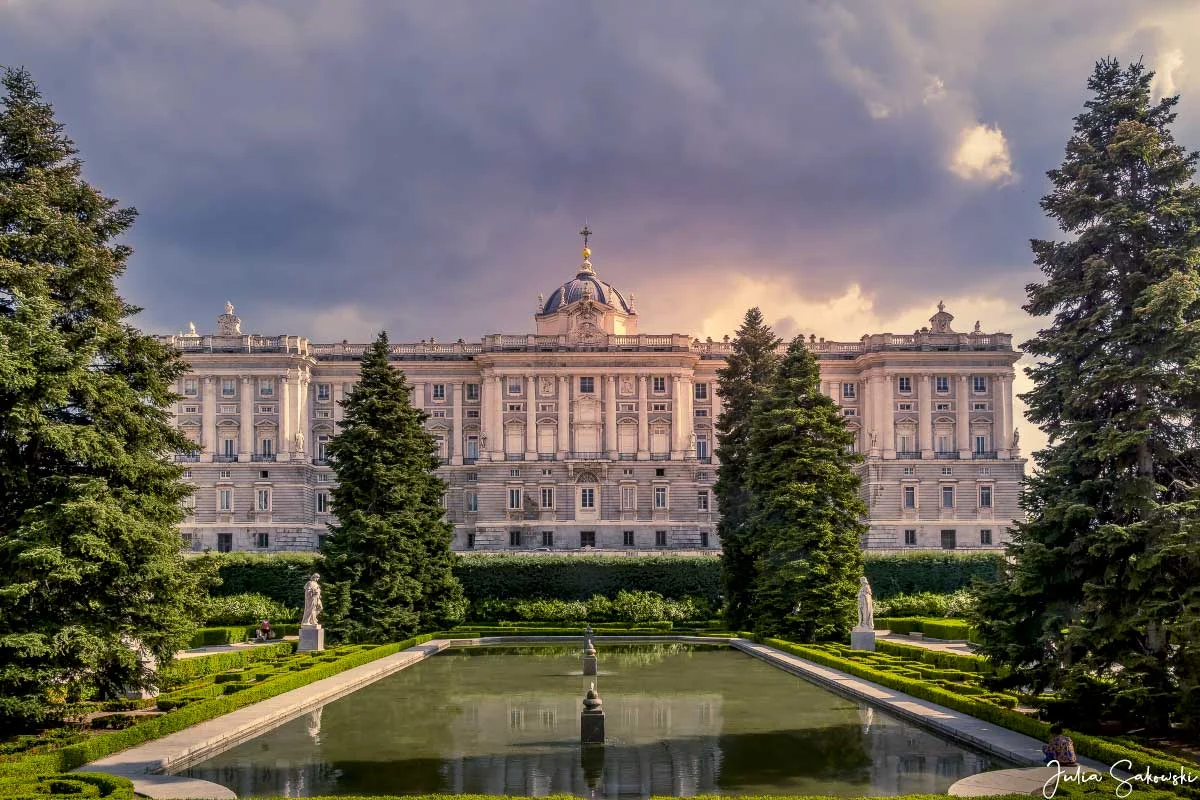
The Royal Palace was a different kind of overwhelming. Every room competes with the previous one in sheer extravagance — chandeliers, velvet walls, gilded everything. It never feels subtle. Even the ceilings look expensive. Spain once ruled half the known world, and this building has absolutely not forgotten that.
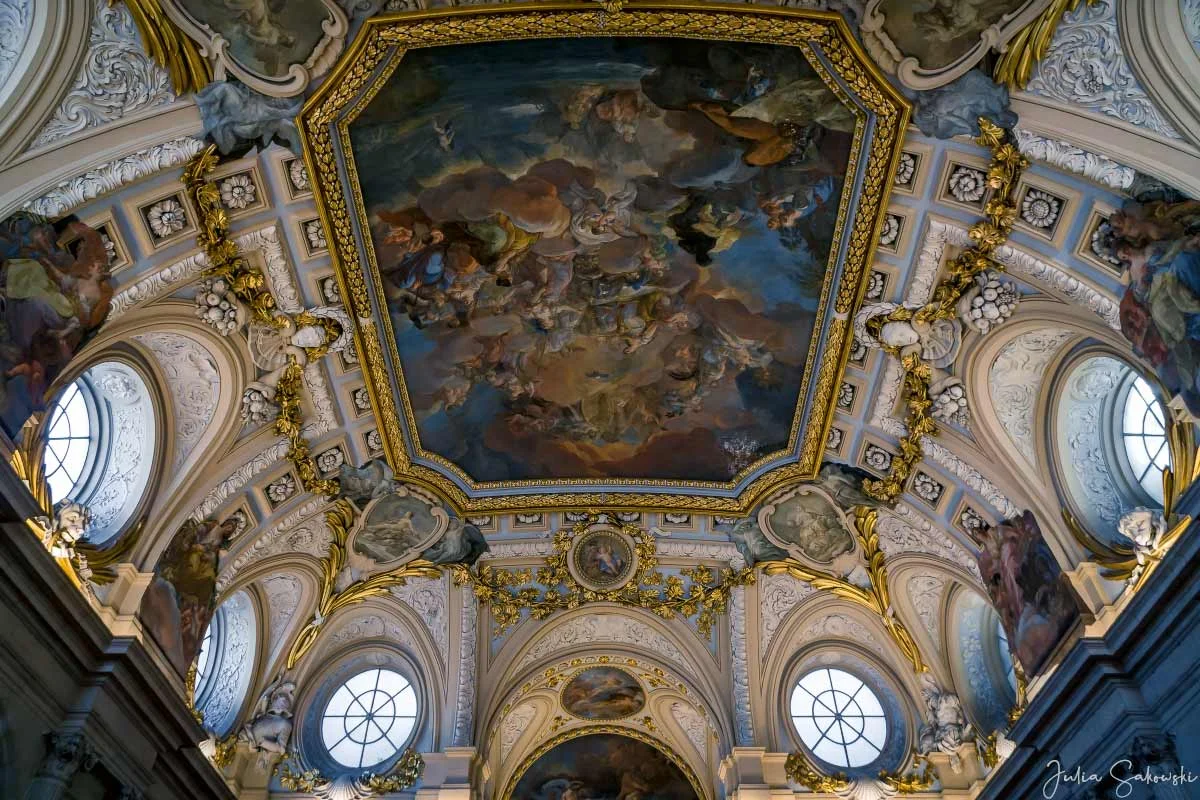
By evening, I had nothing left. Museums, churches, gold on every surface — I'd walk back to the apartment and drop dead until morning.
Food saved me. We tried paella once. I wasn't particularly impressed — maybe my expectations were too high, or maybe paella just isn't my thing. But I found my people in the tapas bars. Jamón Ibérico hanging outside every café, sliced paper-thin. And Salmorejo — a cold tomato soup, smoother and richer than gazpacho — which I ordered every single day and eventually brought the recipe back home to the States.
We were waiting for a table at the paella restaurant when a group of American tourists approached us, asking for directions in very enthusiastic, very broken Spanish. It's a universal law of travel: tourists always find other tourists. Never locals. Always each other. Like magnets. We did our best, sent them roughly in the right direction, and hoped for the best.
Toledo
My only advice for Toledo: don't plan anything.
Just wander. Get lost in the medieval streets. Follow a staircase wherever it leads. Step into a church on a whim. In Toledo, unexpected churches hold El Grecos. Processions appear out of nowhere. The whole city feels like it’s been quietly holding its breath for centuries.
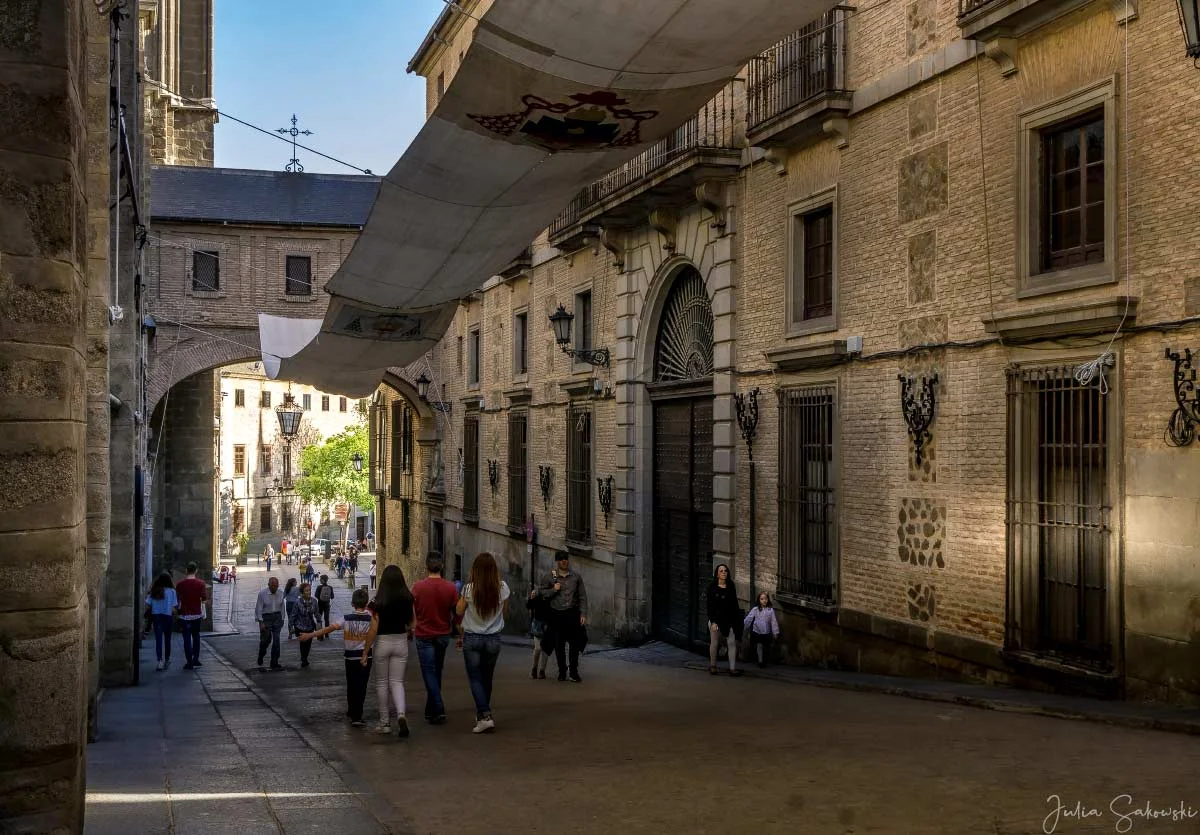
The Cathedral is staggering — a vast world of stone, gold, and shadow. If you ever find yourself wondering what became of the gold Spain brought back from the Americas, look at the altar of the Capilla Mayor.
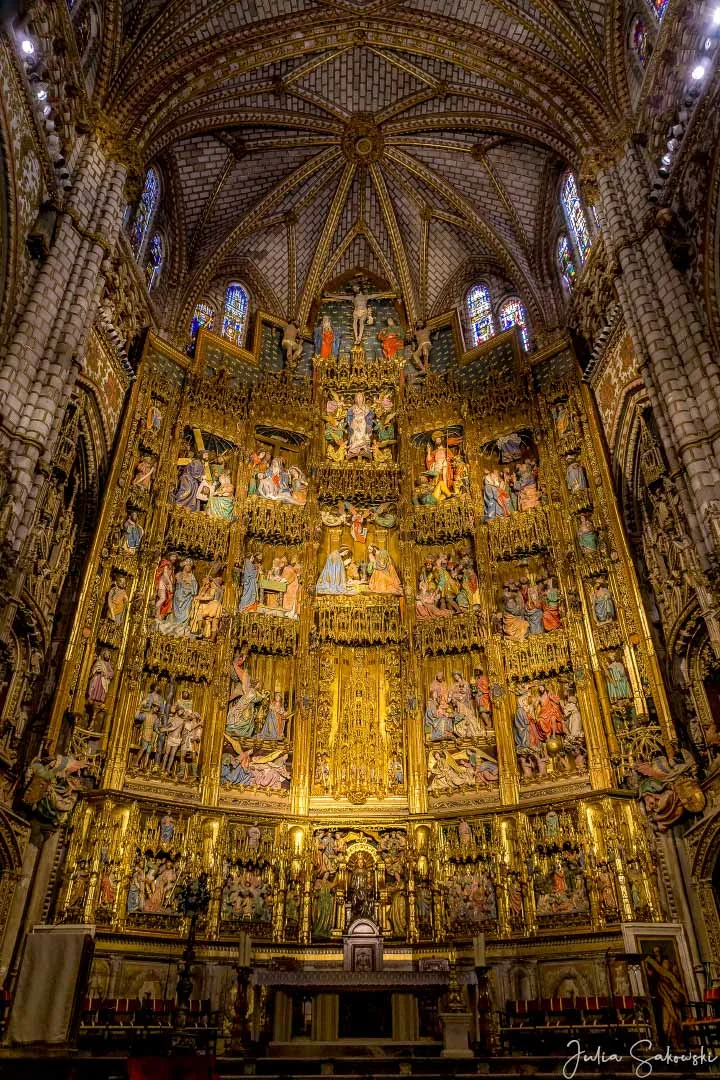
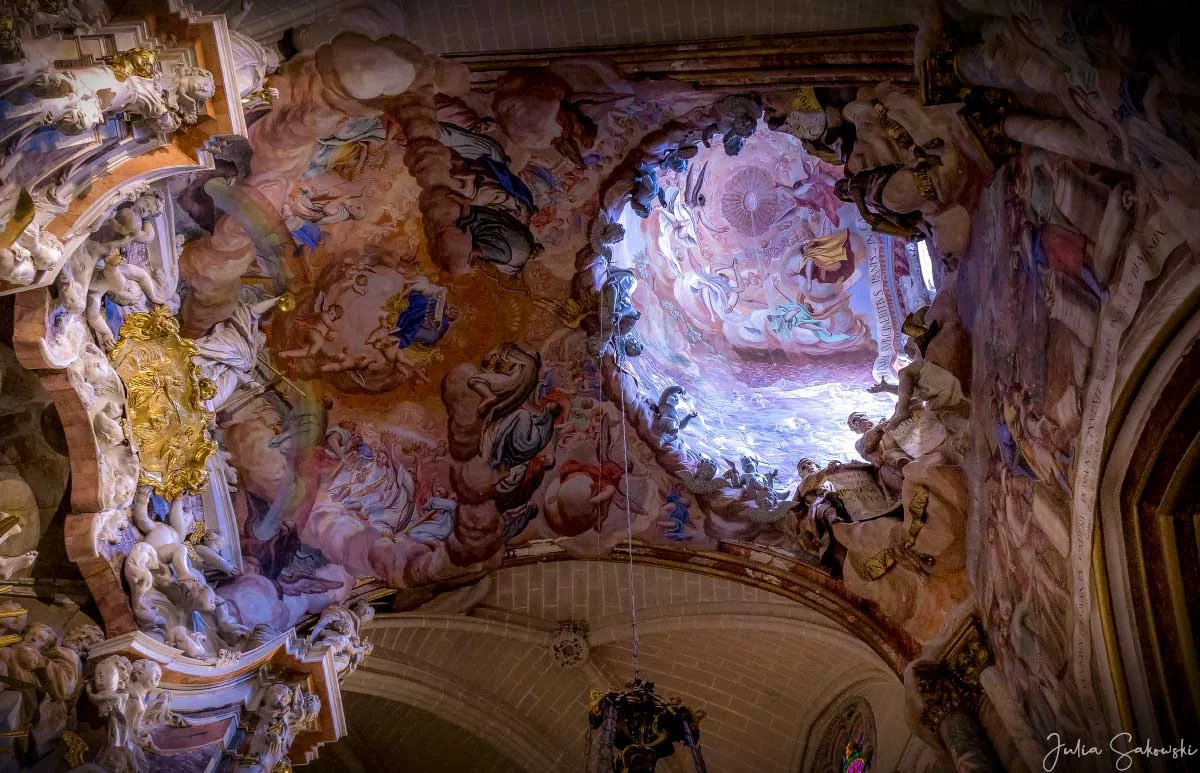
Hours disappeared as I wandered through the cathedral: the chapter hall, the sacristy lined with works by El Greco, Caravaggio, Titian, Van Dyck, and Goya, the treasury with its enormous golden monstrance. By the time I reached El Transparente, I felt almost dreamlike, dazzled by gold, light, and details.
A Baroque altar tucked inside a Gothic cathedral, lit by a single shaft of sunlight falling through a hole in the roof. The artist somehow turned that beam of light into the feeling of heaven itself — saints ascending into the brightness, stone figures that seem genuinely mid-flight.
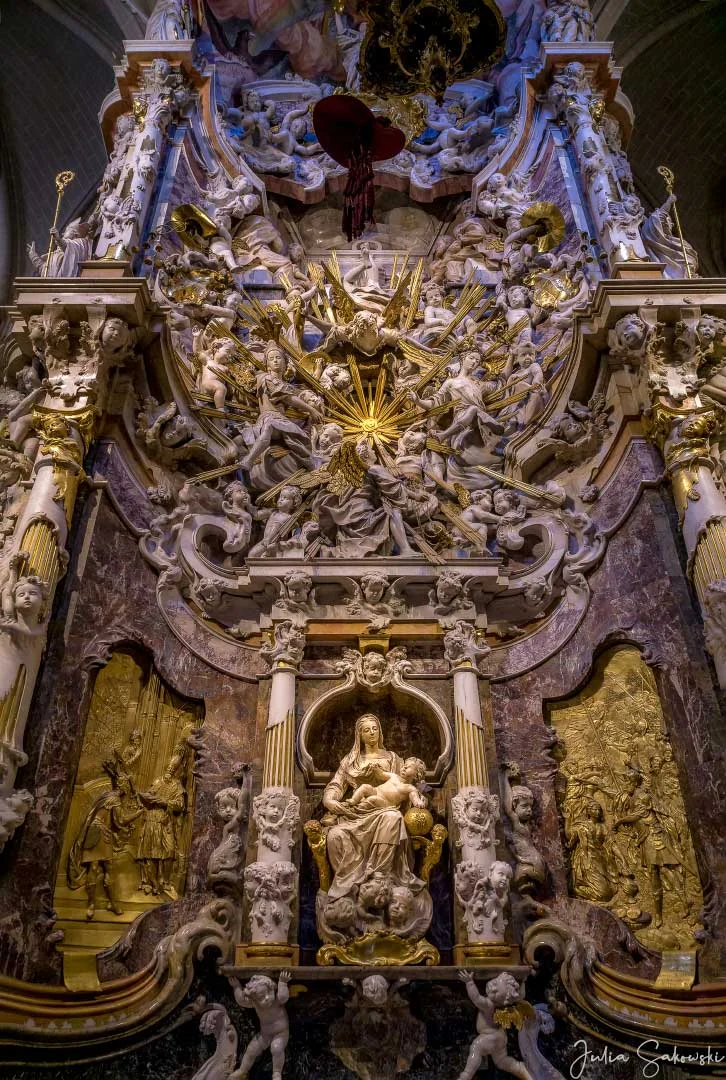
I stood there with my neck craned upward and felt my soul trying to follow them.
El Escorial
An hour from Madrid sits El Escorial, built by King Philip II of Spain. Cold, massive, and a little severe — part monastery, part palace, part royal tomb.
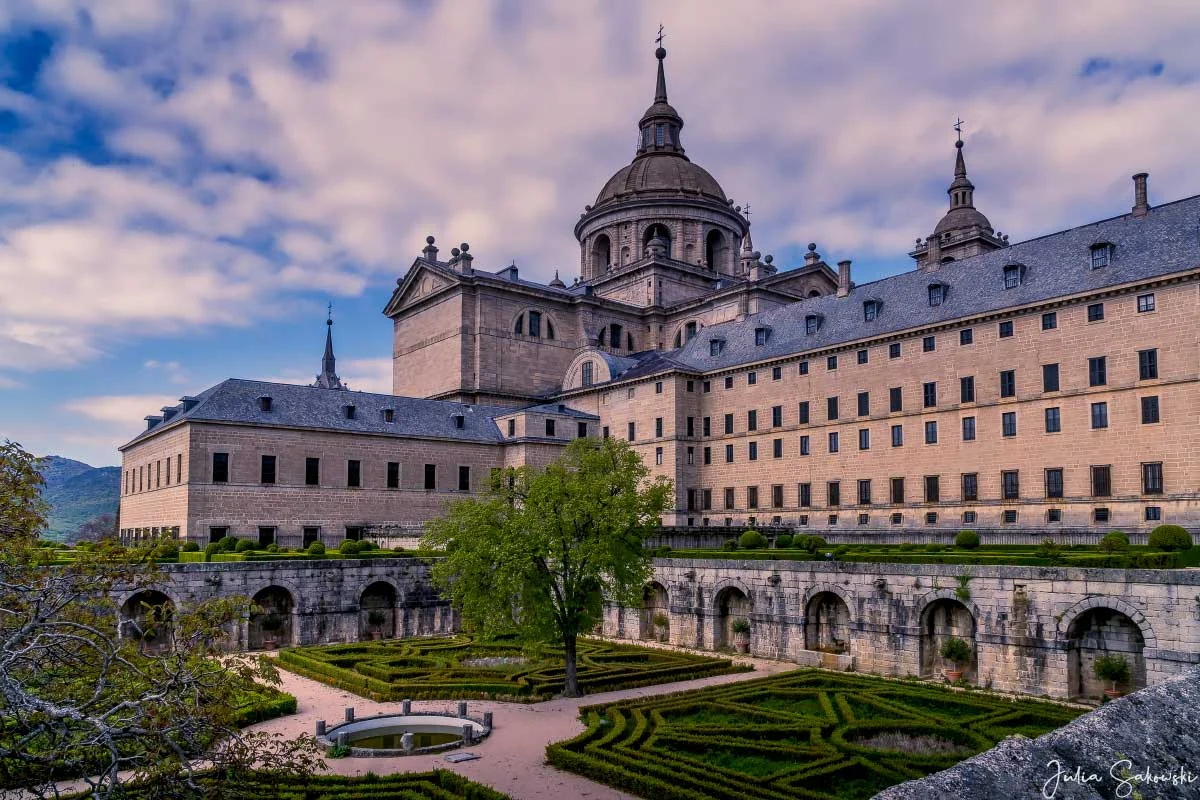
Most kings built castles or cathedrals. Philip II built a monastery, then added a royal mausoleum and modest personal quarters for himself. His motto was essentially a palace for God, a hut for the king.
And yet inside: Titians, a Velázquez, a Raphael — hanging in what appeared to be a waiting room for visitors. A Bosch in the gallery. A Benvenuto Cellini crucifix in the basilica, hanging as casually as a landscape painting.
At some point in Spain, the priceless art stops surprising you. That's when you know you've been here long enough.
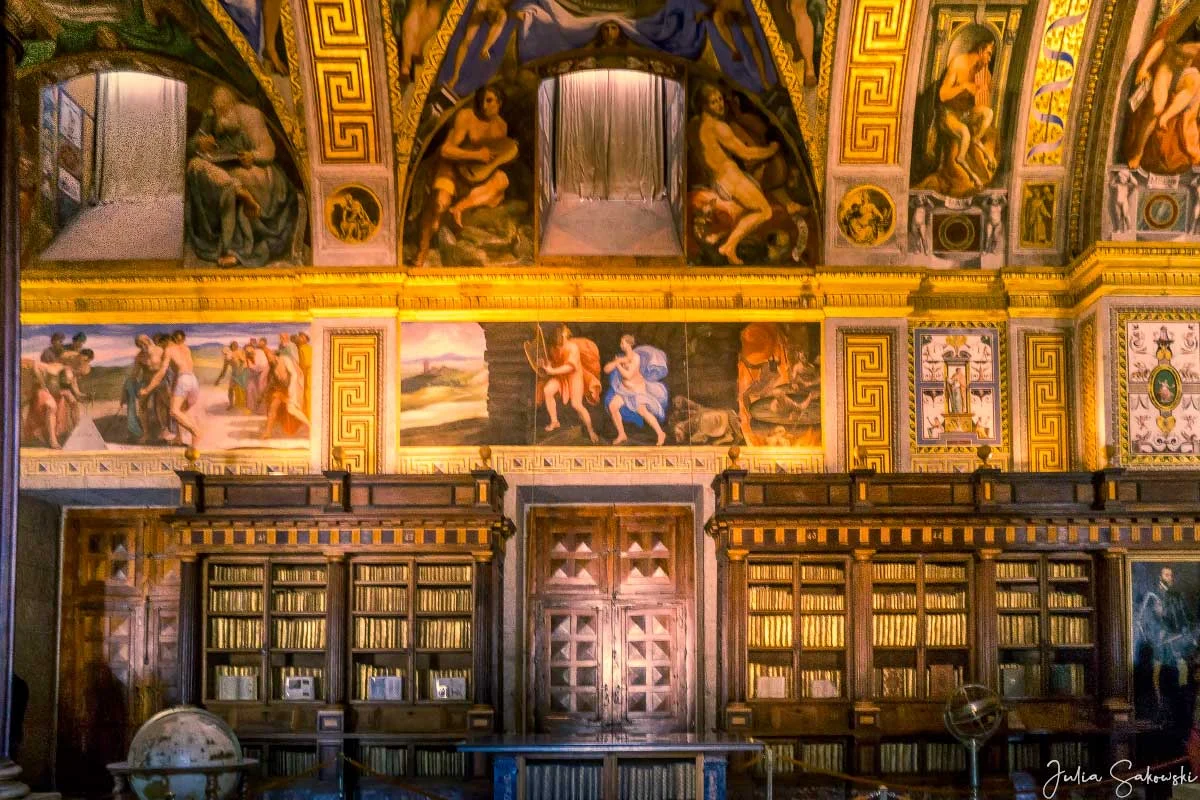
My favorite room was the library — long and narrow, with marble floors, frescoed ceilings, and windows looking out over the mountains. Reached by climbing a tower staircase. Worth every step.
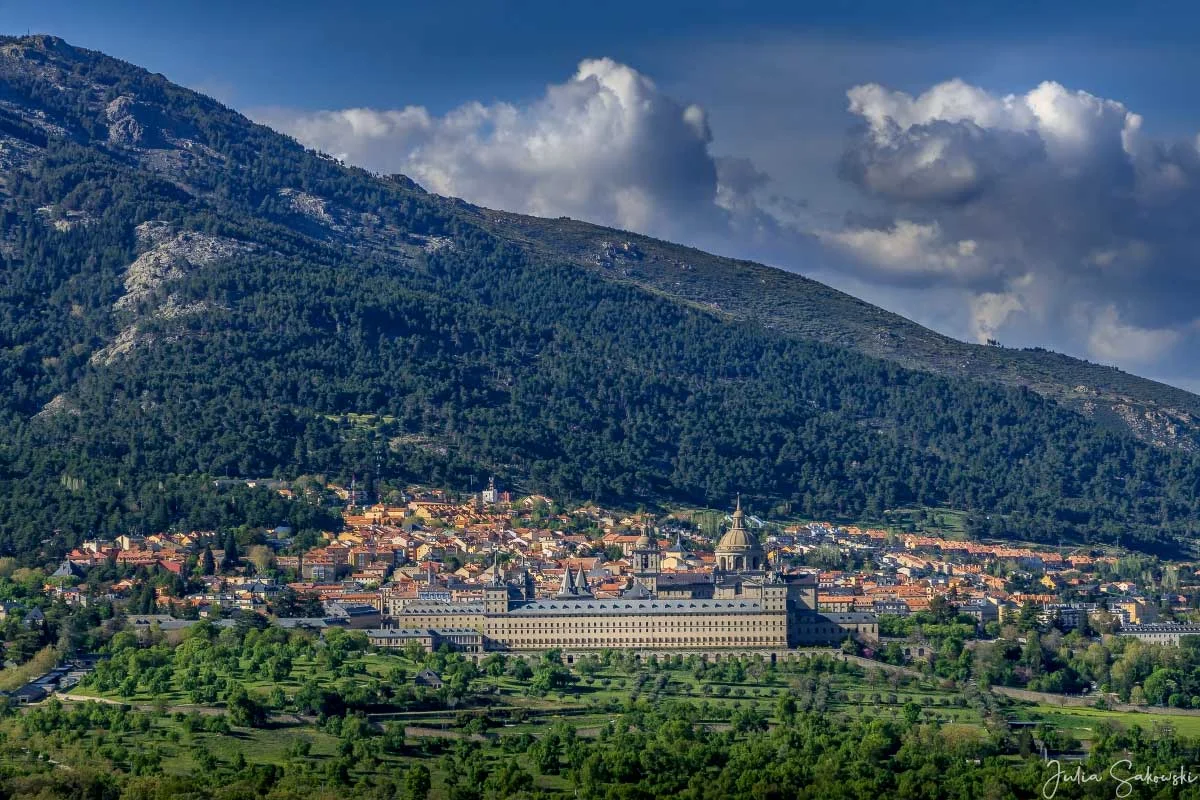
On the way out, we climbed the hill opposite and sat on a stone throne — the spot where Philip II himself used to sit and look out over his creation. The view makes you understand why he kept coming back.
Segovia
I saw the Roman aqueduct and forgot how to navigate.
It's one of those things you think you know from photos. Then you see it in person and realize you had absolutely no idea. Nearly two thousand years old. No mortar, no cement — just stone balanced on stone, still standing, still perfect. The Romans never stop being astonishing.
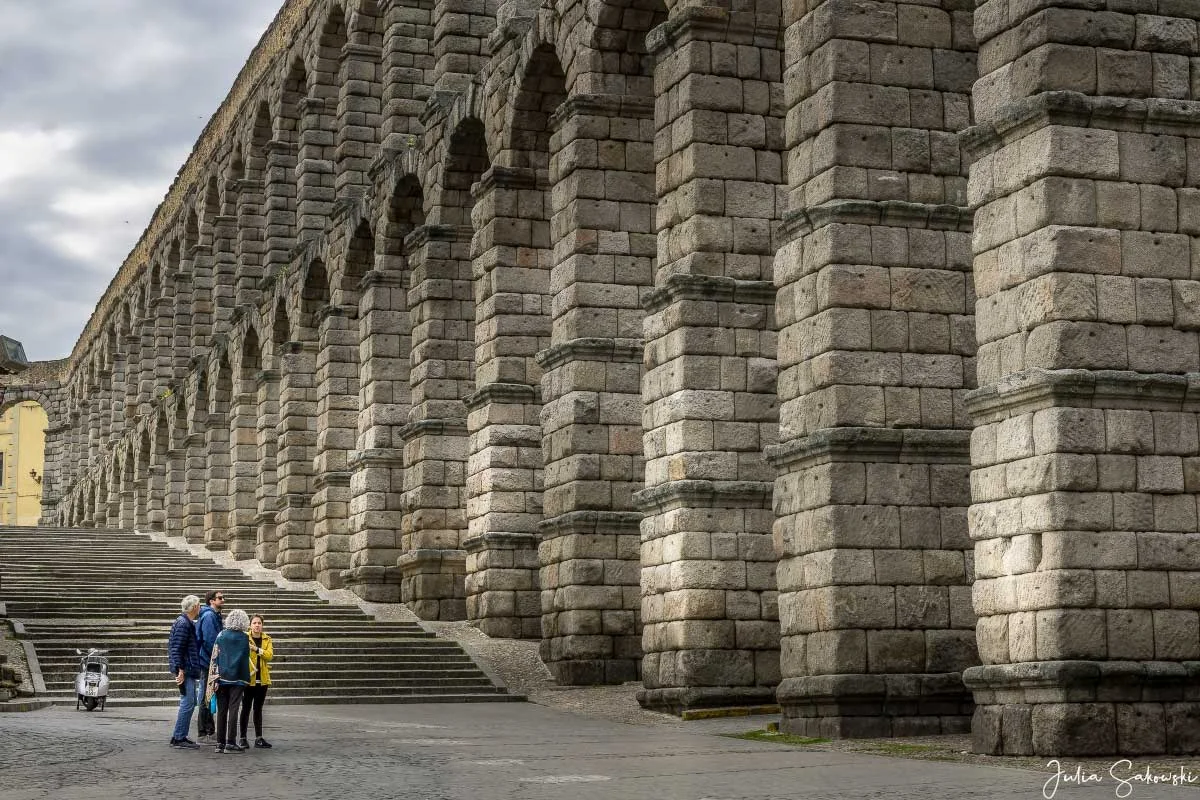
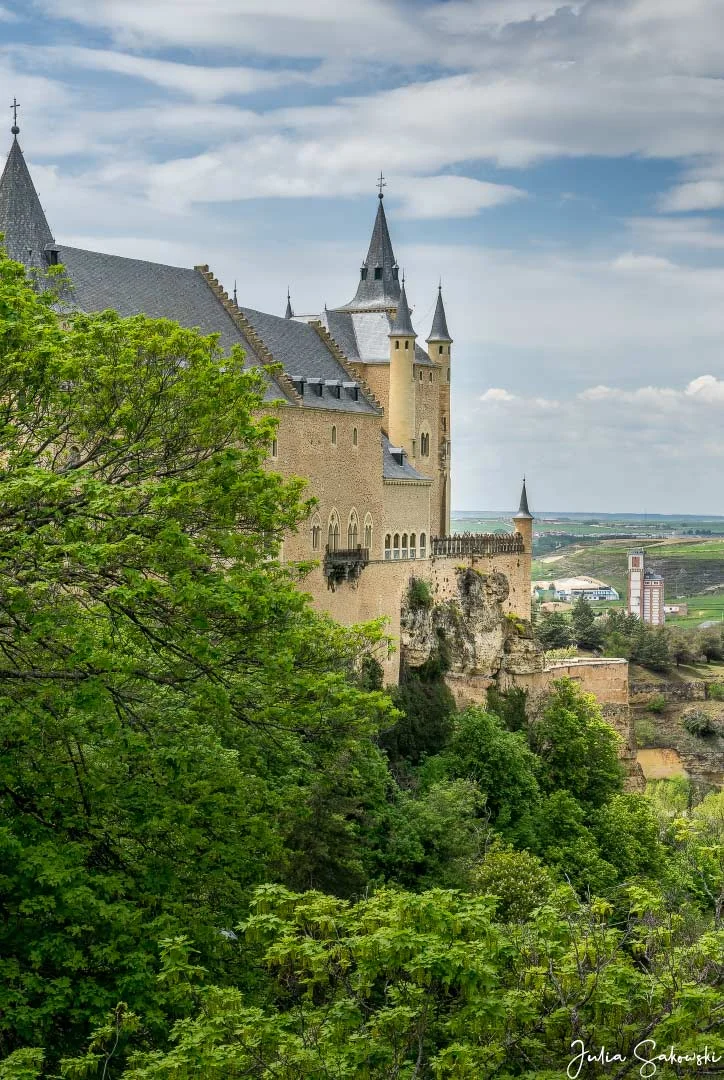
The rest of Segovia matches that mood perfectly — quiet streets, warm afternoon light, and the Alcázar rising at the edge of a cliff where two rivers meet. They say it inspired the castle in Snow White. Standing there, looking up, that's completely believable.
Spain doesn't ask you to rush through it.
It asks you to slow down, stay at the table longer, order another round, and pay attention to things you'd normally walk past. And then, just when you've settled into that rhythm — it's time to leave.
That part never gets easier.
Comments
Leave a comment