
Amsterdam Doesn't Warn You
Most cities introduce themselves with landmarks.
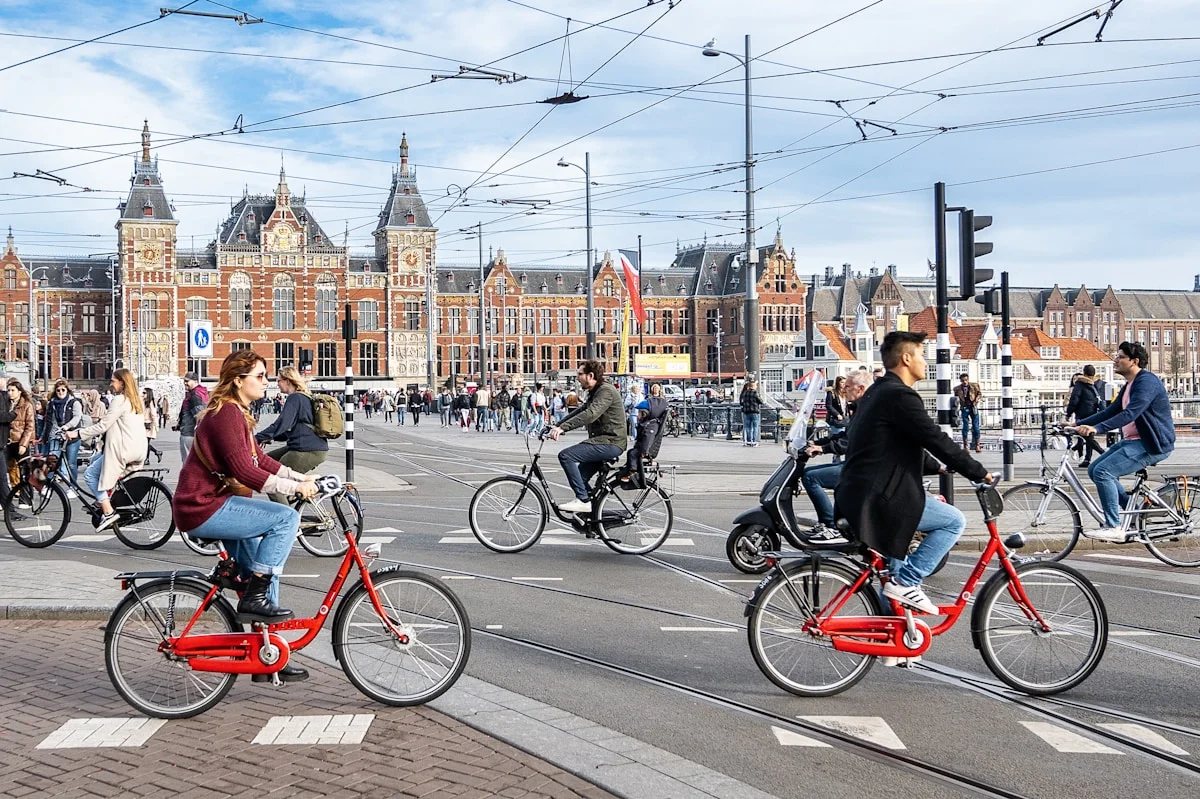
Amsterdam introduces itself with bicycles trying to kill you.
Within ten minutes of leaving the station, we had already been yelled at twice for standing in the bike lane. Not intentionally — the bike lane simply looked identical to the sidewalk. Cyclists flew past carrying groceries, flowers, entire children, and in one case what looked suspiciously like a full-sized ladder.
The city moves fast, even when the canals make it look slow.
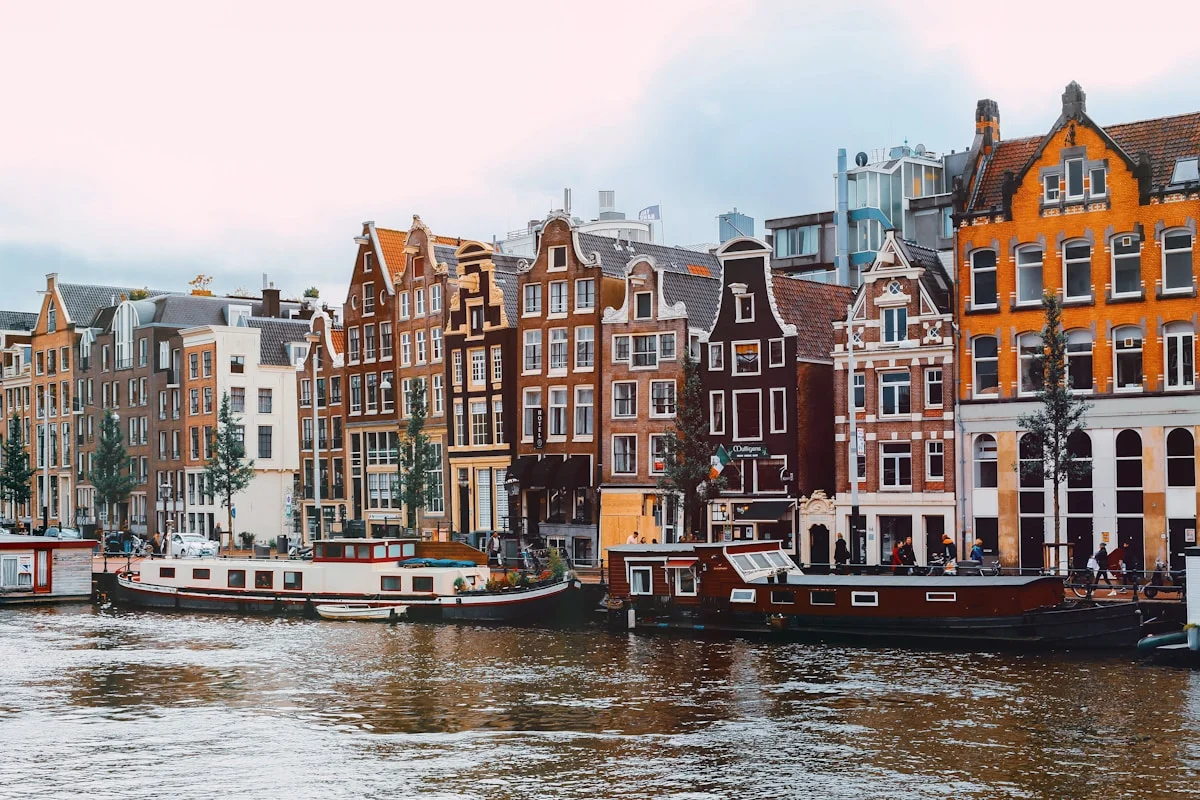
The houses looked even stranger in person than in photographs — impossibly narrow, slightly tilted forward as if they were leaning over the water to listen. Some of them were built on wooden piles driven into marshland centuries ago, which explains why Amsterdam occasionally resembles a row of drunk aristocrats trying to remain dignified.
And then there were the hooks.
Nearly every old house had a metal beam or hook protruding near the roofline. At first they looked decorative. Then we learned furniture is still hauled through windows because the staircases inside are too narrow and steep to move anything larger than a chair.
Some houses even lean slightly forward on purpose, so suspended cargo won’t scrape against the façade while being lifted.
Suddenly, the leaning houses looked less charming and more practical.
The City That Pulls Cars Out of Water
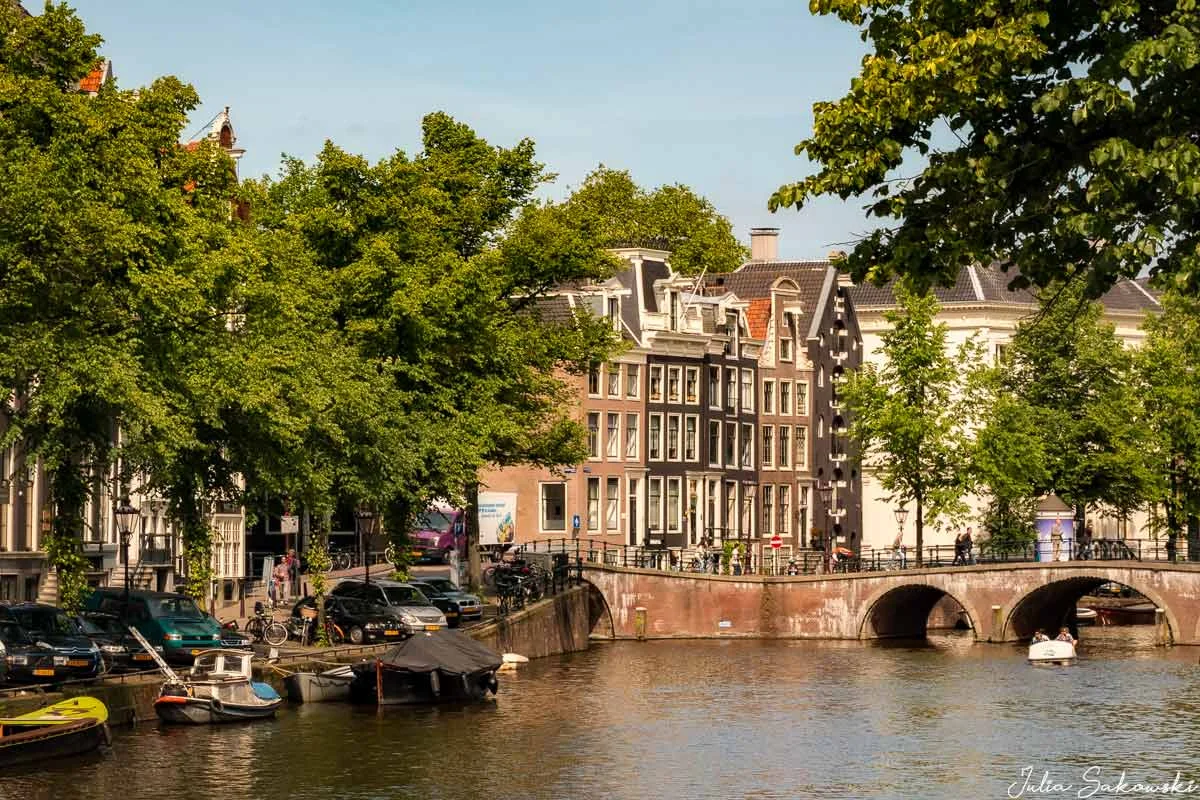
Amsterdam treats canals the way other cities treat parking lots.
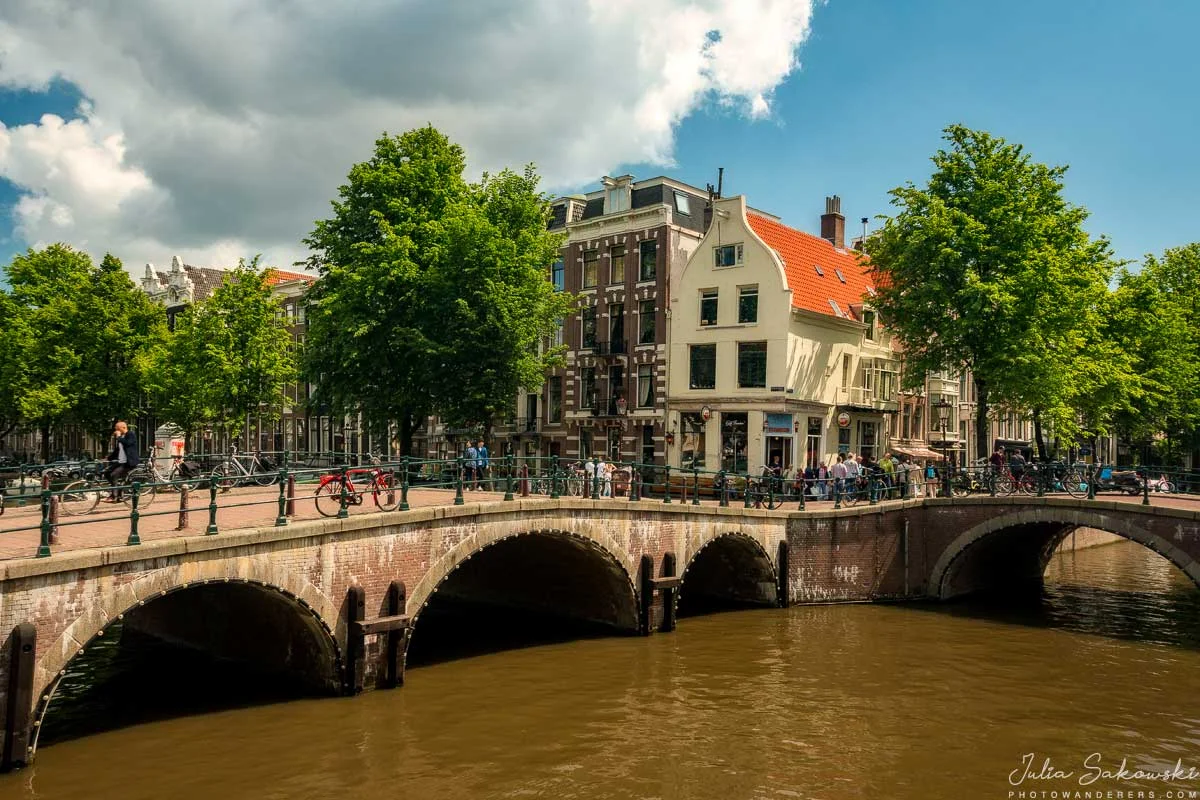
Everywhere we walked, there were bikes chained to bridges, flower pots balanced over black water, and boats squeezed into spaces that looked physically impossible.
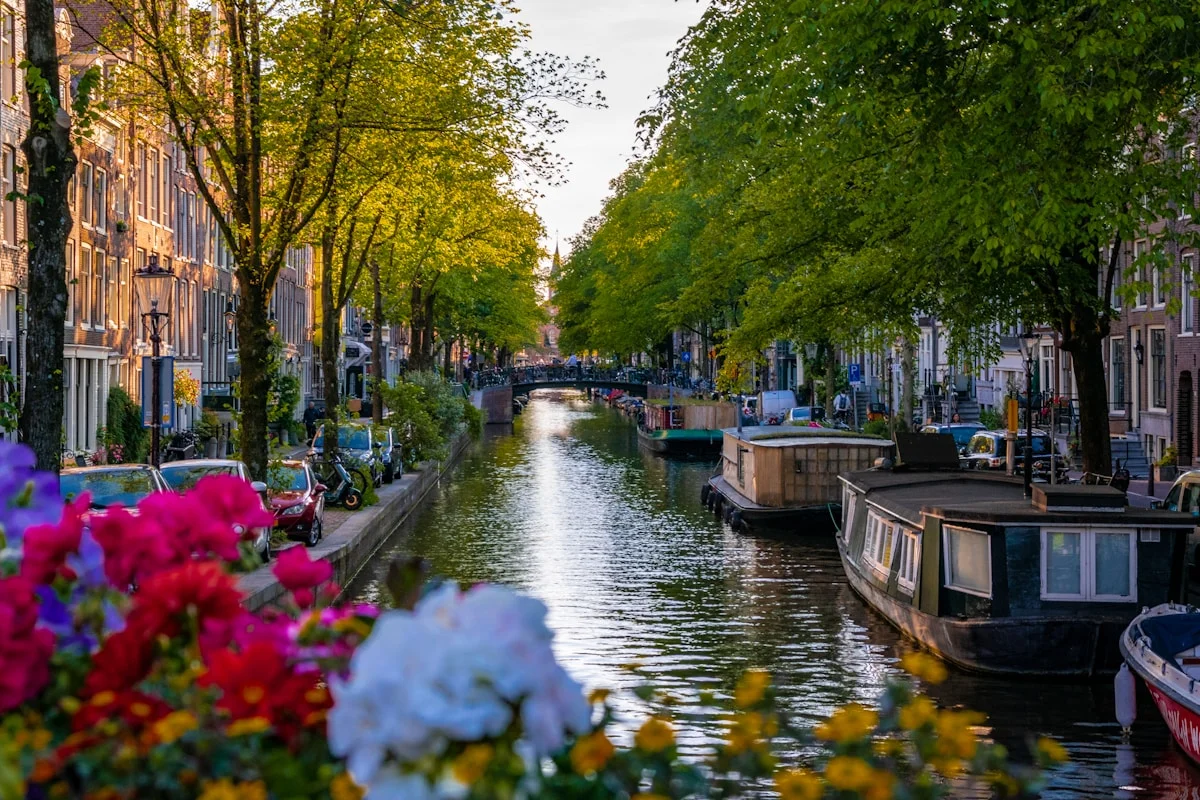
Then we heard one of those absurd local facts that immediately makes a city memorable: around 35 cars are pulled from Amsterdam’s canals every year.
Thirty-five.
Not historically. Every year.
After that, the canals stopped feeling purely romantic.
The water itself was darker than I expected — not the sparkling blue from postcards, but deep brown-black water reflecting windows, bicycles, and clouds in warped fragments. At night, it became almost mirror-like.
The Floating Flower Market and the Seed Problem
What I remember most about the Bloemenmarkt is the smell: flowers mixed with canal water, waffle sugar, cigarette smoke, and rain. That combination probably exists nowhere else on earth.
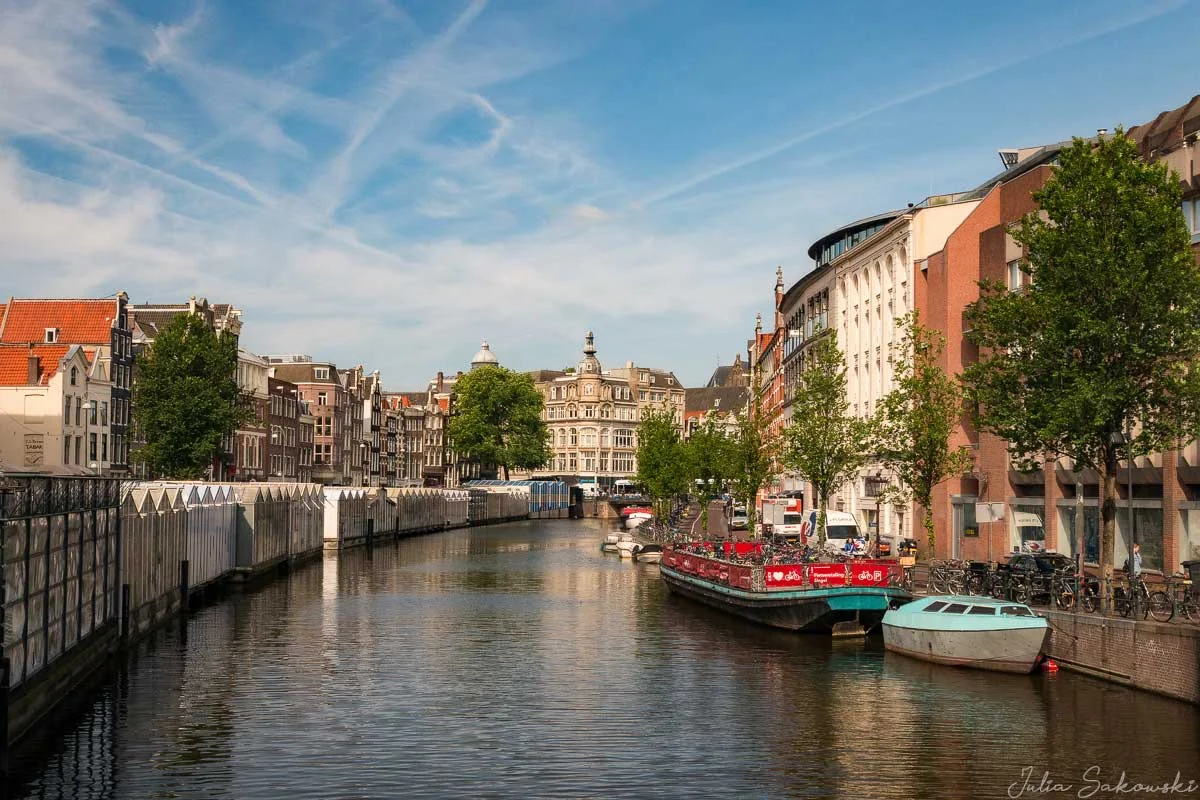
The market itself was exactly the right amount of ridiculous. Tourists squeezed between stalls overflowing with tulip bulbs, wooden clogs, cheese knives, postcards, and cannabis starter kits displayed with complete casualness.

One packet showed a plant taller than the person holding it. Another promised "excellent balcony results."
For a few minutes, we seriously discussed whether it would survive the flight home and whether the neighbors would appreciate the new gardening hobby.
Probably not.
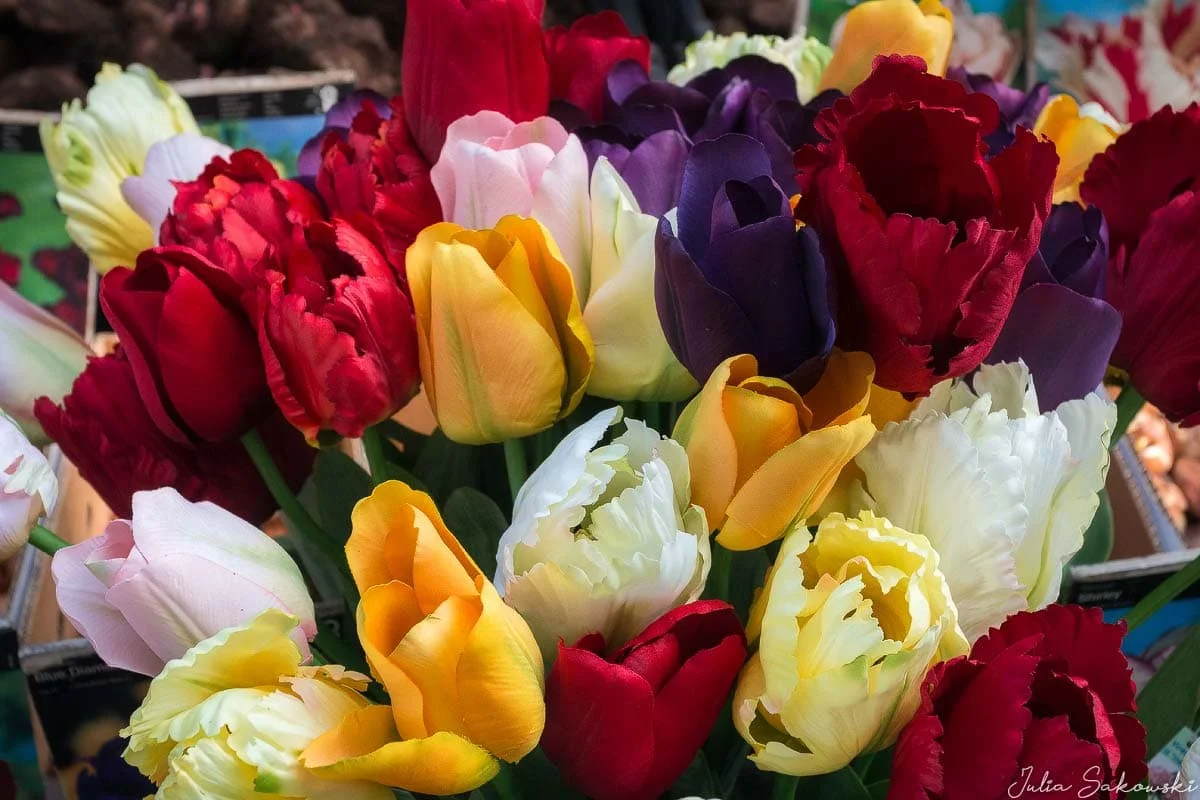
Tulip season had just ended when we arrived — missed it by two weeks, which stung — but the flowers themselves felt almost aggressively colorful against the grey sky. Rows of orange, purple, red and yellow arranged with military precision.
Churches, Palaces, and Saskia’s Flowers
Amsterdam hides history casually.
Not behind fences or hilltops, but directly between coffee shops, bike lanes, and souvenir stores.
One moment, we were standing in Dam Square facing the Royal Palace — enormous, symmetrical, heavy with the kind of architecture designed to impress visitors before they even entered.
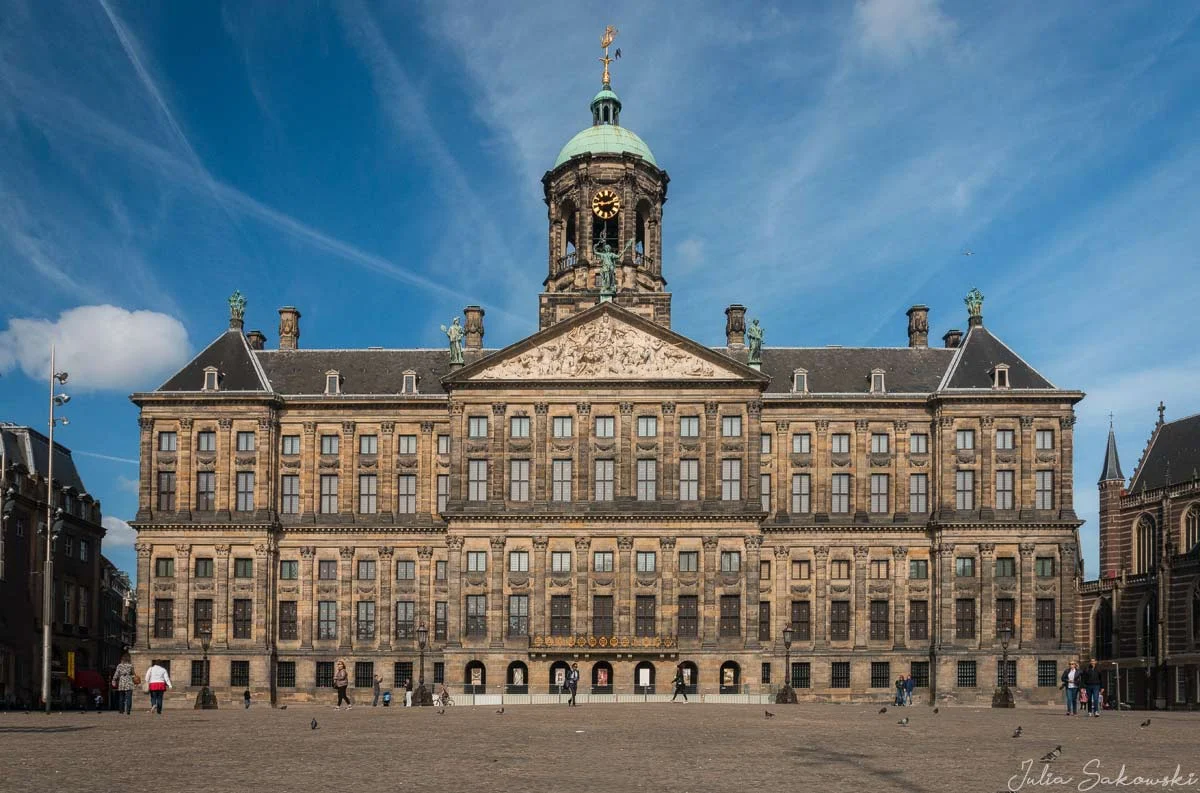
It originally served as the city hall during Amsterdam’s Golden Age before becoming a royal residence. Even surrounded by tourists and street performers, the building still manages to look intimidatingly confident.
A few steps away stood De Nieuwe Kerk, where Dutch monarchs are inaugurated.
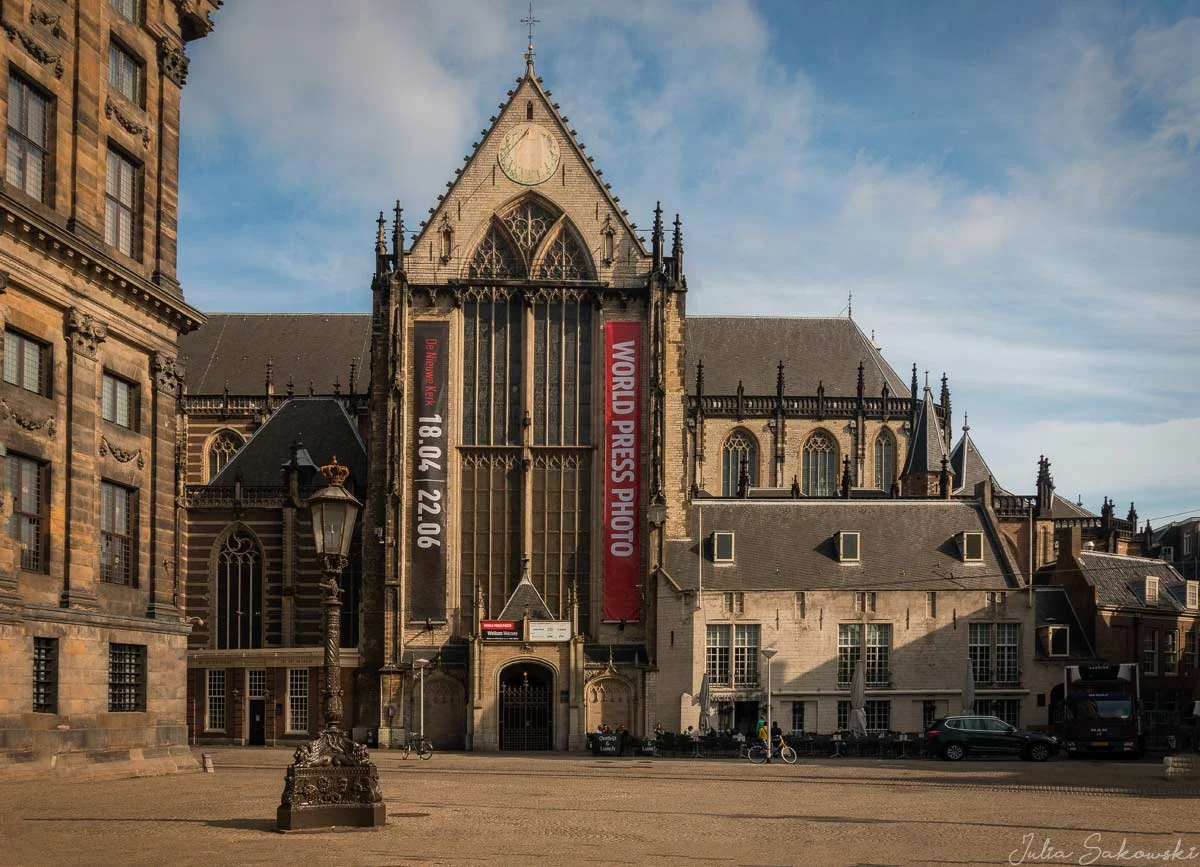
The contrast was strange:
outside, people taking selfies with waffles;
inside, centuries of royal ceremonies.
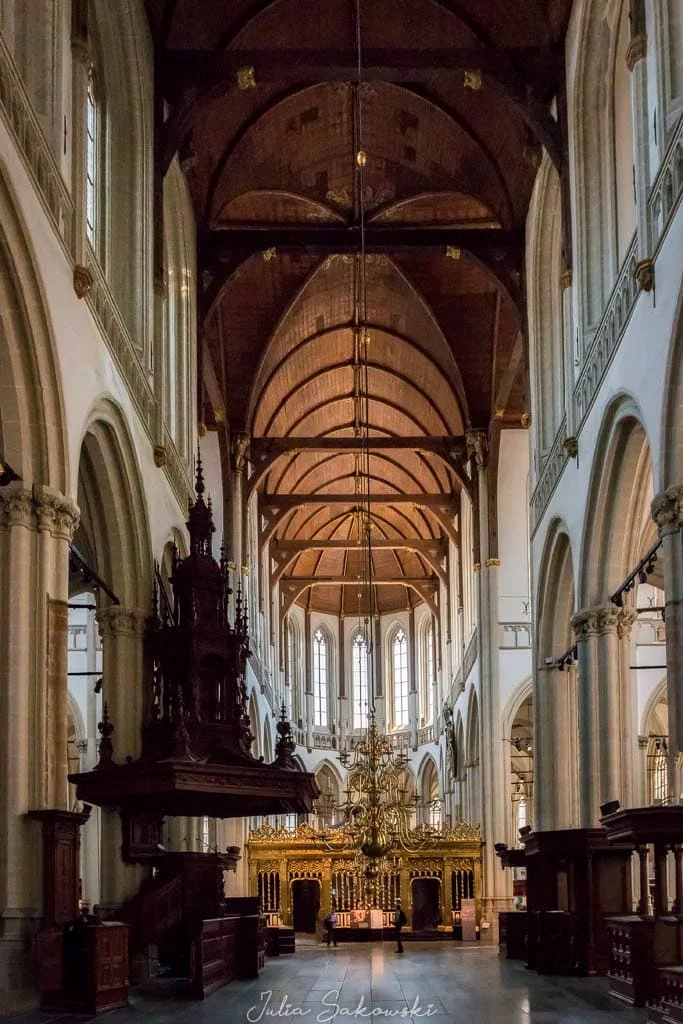
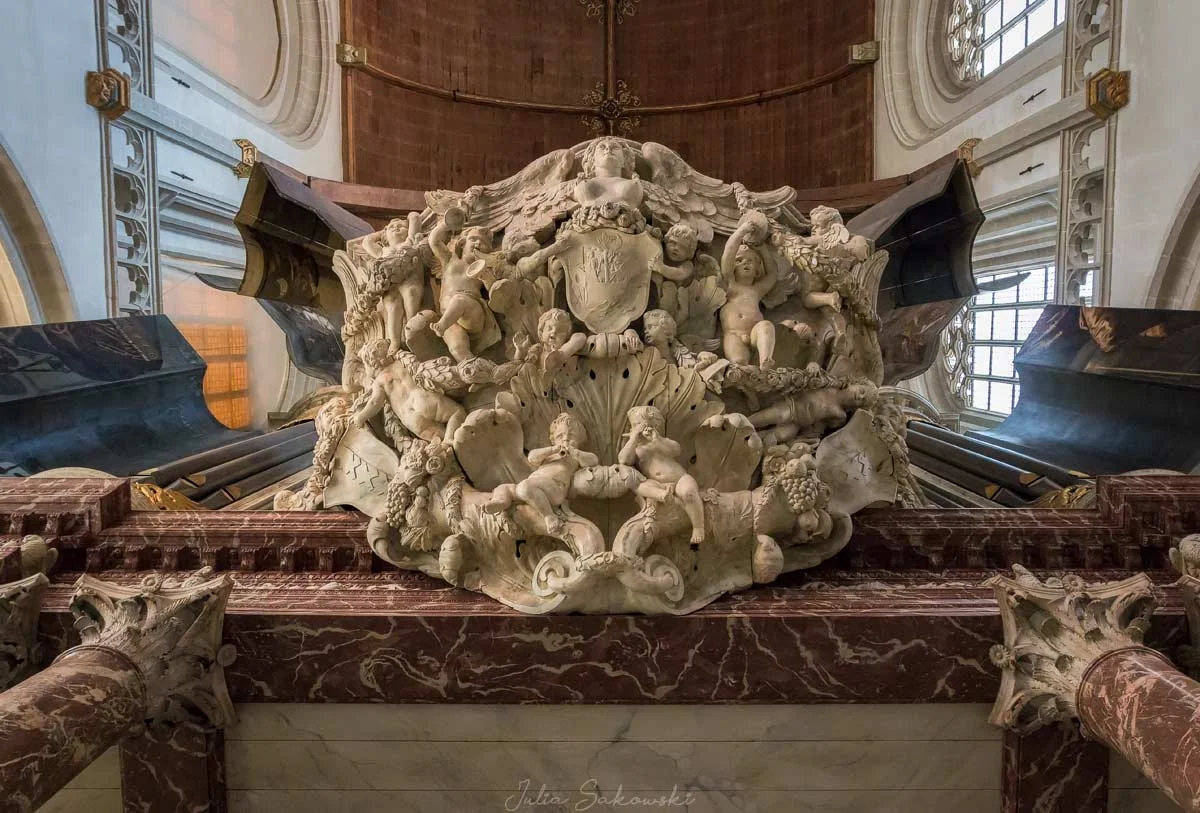
De Nieuwe Kerk — the New Church — was built 600 years ago, which makes it only a century younger than the Oude Kerk across town. Amsterdam's sense of 'new' is relative.
But the most surprising church on that walk wasn't the one with royal ceremonies.
You could walk past it three times without noticing it. Squeezed tightly between shops on Kalverstraat, the hidden Catholic church looks almost invisible from the street.
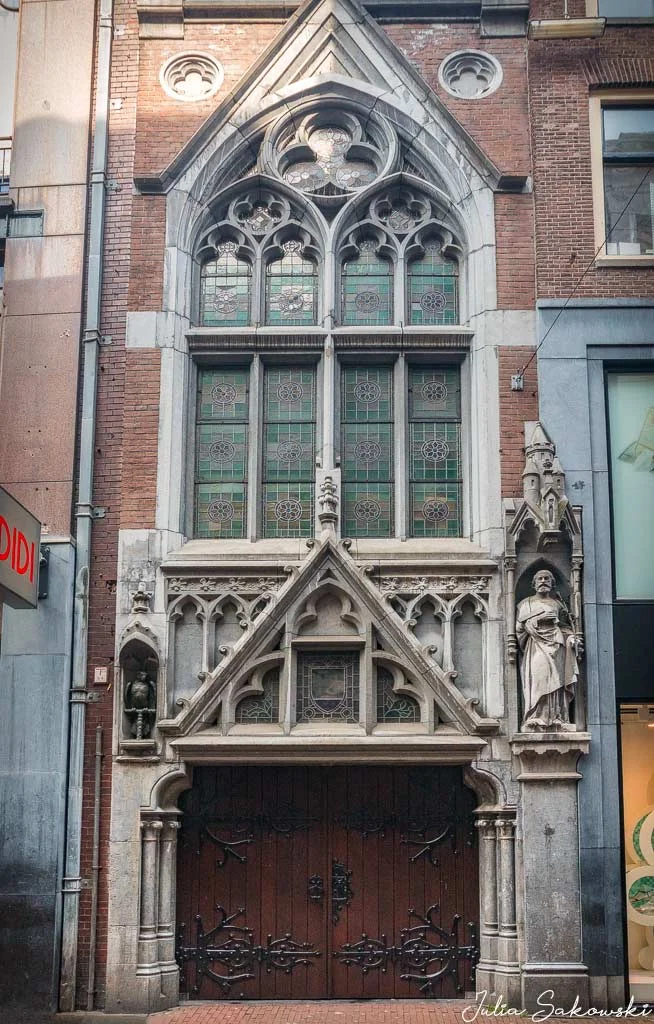
That invisibility was intentional.
After the Protestant Reformation, Catholics were forbidden from openly practicing their religion, so churches like this were concealed behind ordinary facades. From outside, it still barely announces itself.
Then you step inside and the noise of the shopping street disappears instantly.
Amsterdam does this constantly — hiding entire worlds behind narrow doors.
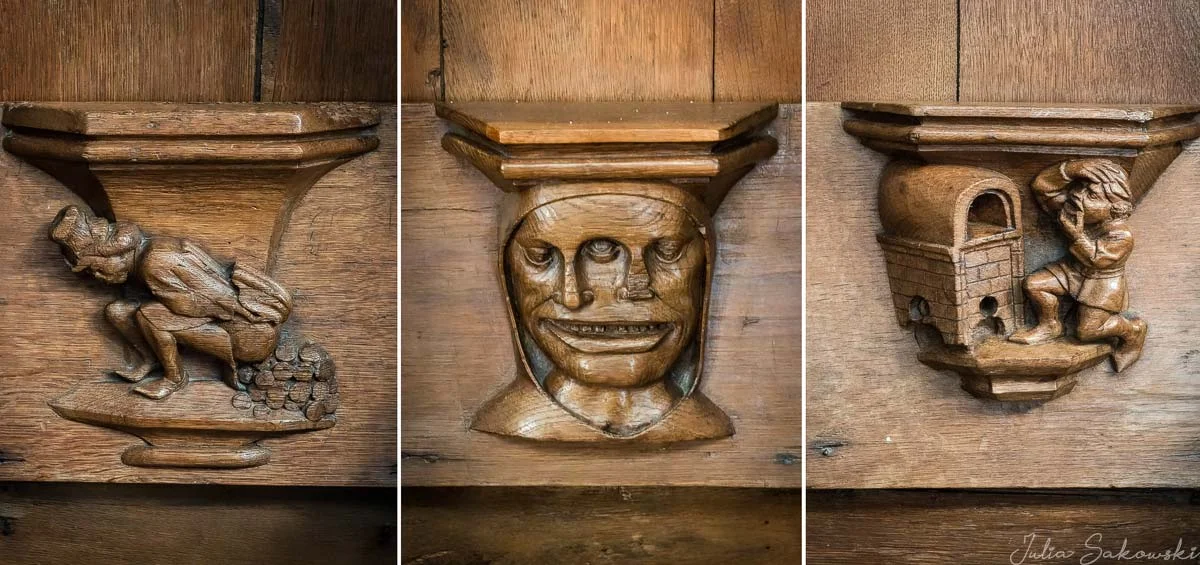
Inside Oude Kerk, the city’s oldest church, we found another kind of hidden detail: misericords carved beneath folding wooden seats. Tiny faces, animals, and symbols tucked where almost nobody notices them anymore.
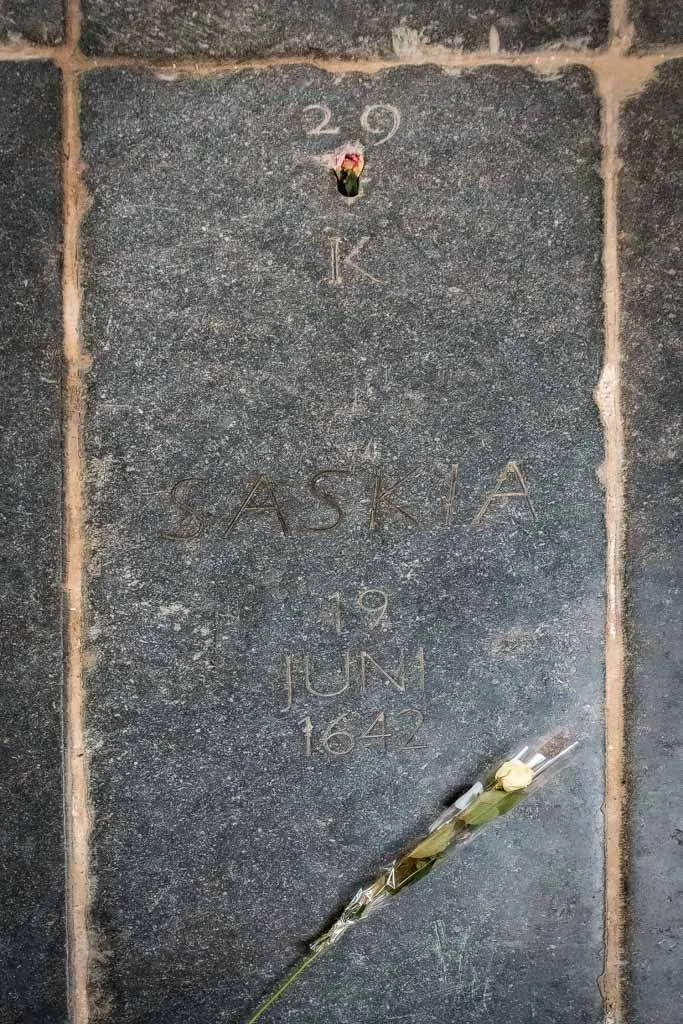
And then there was Saskia van Uylenburgh’s grave.
Fresh flowers had been left there.
Not by the church. By visitors.
She died in 1642, and people still bring flowers.
That detail somehow felt more powerful than the palaces or royal churches. Centuries later, in a city crowded with tourists and bicycles and noise, somebody still arrives carrying flowers for Rembrandt’s wife.
Alex and The Night Watch
The Rijksmuseum was crowded enough to feel intimidating.
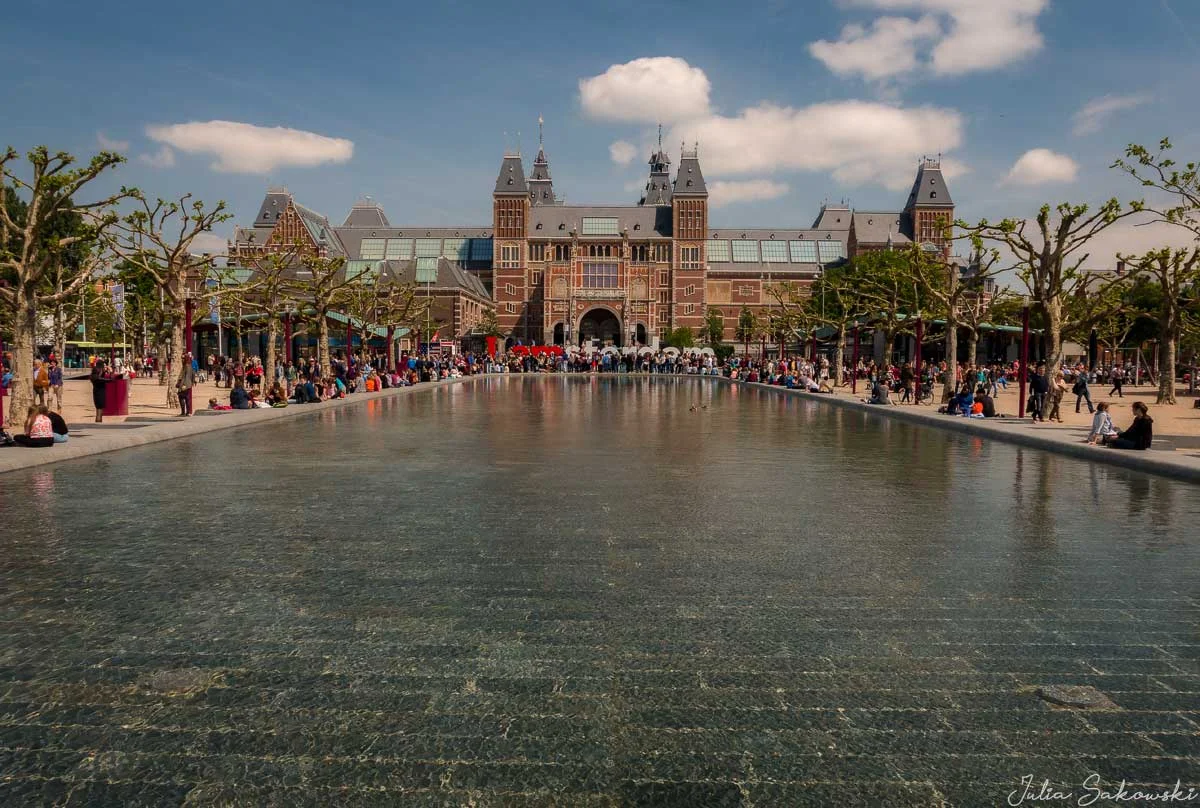
Groups moved room to room behind raised umbrellas while exhausted tourists searched desperately for benches. But all of that disappeared near The Night Watch.
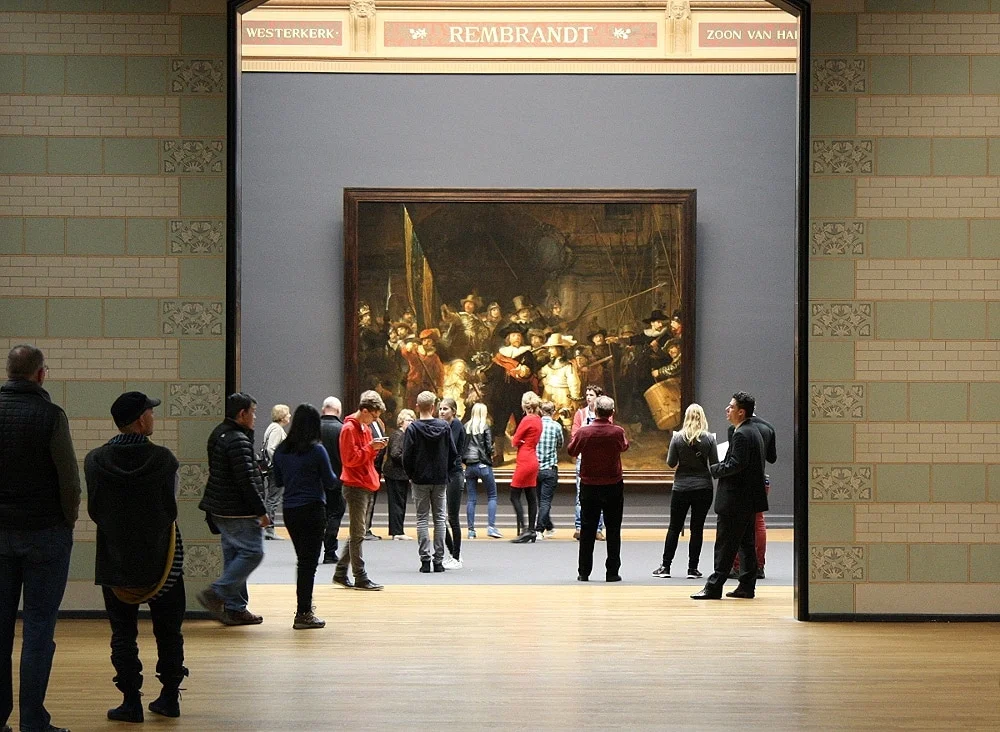
The painting is enormous in a way photographs completely fail to explain. Not just large — physically dominant. People went quiet in front of it without being asked to.
Alex walked into the room, stopped, and simply stayed there.
I continued through several galleries, floors, and eventually circled back.
He was still standing in exactly the same place with the same expression people usually reserve for mountain views or car crashes.
I asked if he was ready to leave.
“Not yet.”
That was the entire answer.
And honestly, I understood it. Some paintings are beautiful. Others feel gravitational.
The Women Who Disappeared
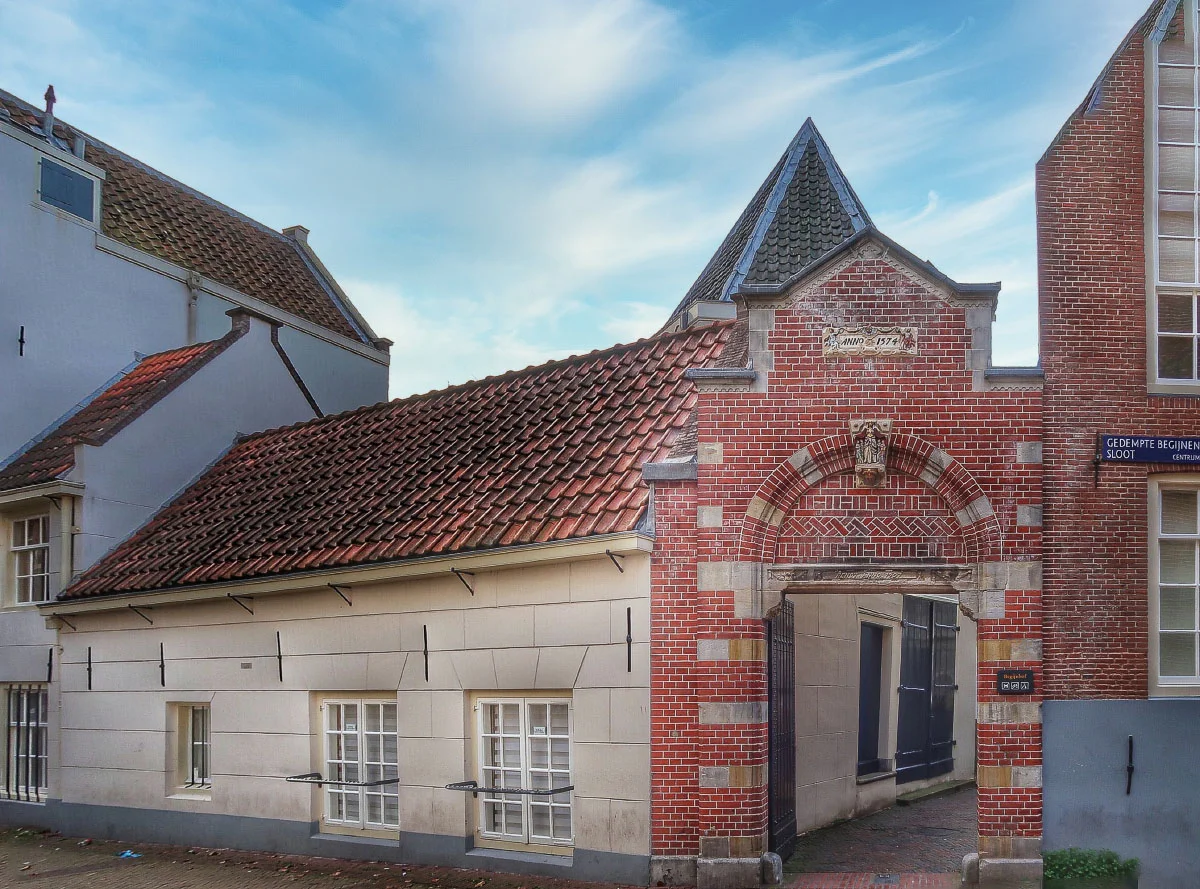
The entrance to Begijnhof is easy to miss.
One moment you’re standing in noisy central Amsterdam surrounded by bicycles, tram bells, and tourists. Then suddenly you pass through a narrow archway and the city disappears.
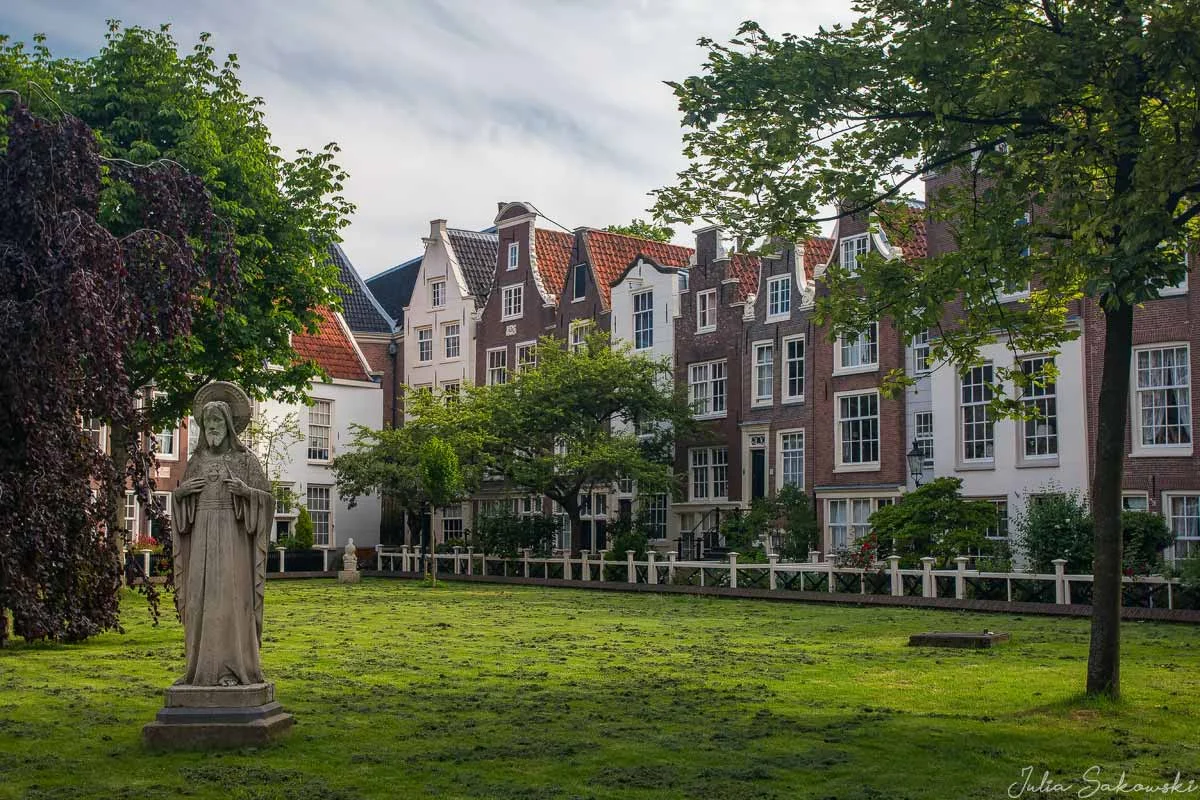
The Begijnhof was founded in the 1300s as a sanctuary for beguines — unmarried religious women who lived together without taking permanent vows. They weren’t nuns, exactly. For centuries, women voluntarily disappeared into this courtyard while Amsterdam expanded and modernized around them.
The last beguine died here in 1971.
1971. Not medieval history. Modern history.
Standing there among the carefully kept houses and trees, it suddenly became easier to imagine the generations of women who passed through the same quiet courtyard while the rest of Amsterdam grew louder outside its walls.
Then somebody's phone rang. A tour group pushed through the archway.
Amsterdam rushed back in.
The Red-Light District at Breakfast Time
The strangest part of Amsterdam was not the nightlife.
It was seeing the Red-Light District at eight in the morning.
Delivery trucks rattled over cobblestones while shop owners swept yesterday’s trash into piles. A man in a business suit drank coffee beside a canal as tourists awkwardly pretended not to look into illuminated windows that hadn’t yet gone dark.
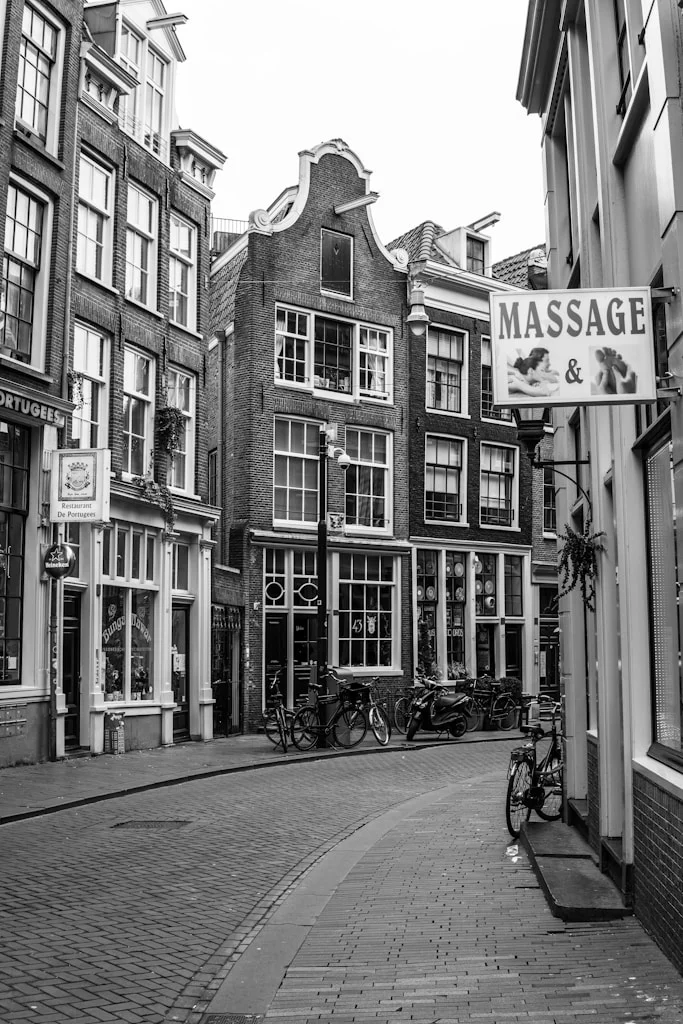
Nothing matched the dramatic reputation.
That was the surprise.
The area felt less dangerous than oddly ordinary — as if the city had long ago stopped arguing with itself about morality and simply moved on.
In the square outside the Oude Kerk — Amsterdam's oldest church, sitting in the middle of the Red-Light District as if it has a point to prove — stands a small bronze statue — Belle, a memorial to sex workers. Easy to walk past without noticing. Most people do.
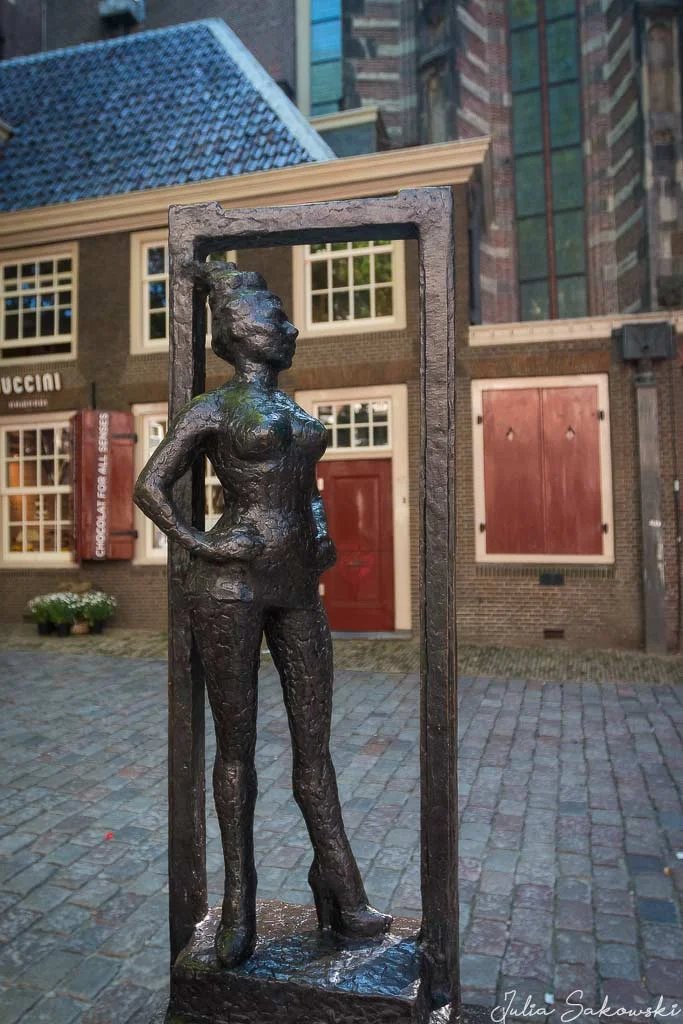
Still, walking through there in daylight created a strange tension. Everyone suddenly became extremely interested in architecture.
Amsterdam After Dark
At night Amsterdam changed completely.
The crowds thinned. The canal water turned black. Apartment windows glowed above the water like small theater stages.
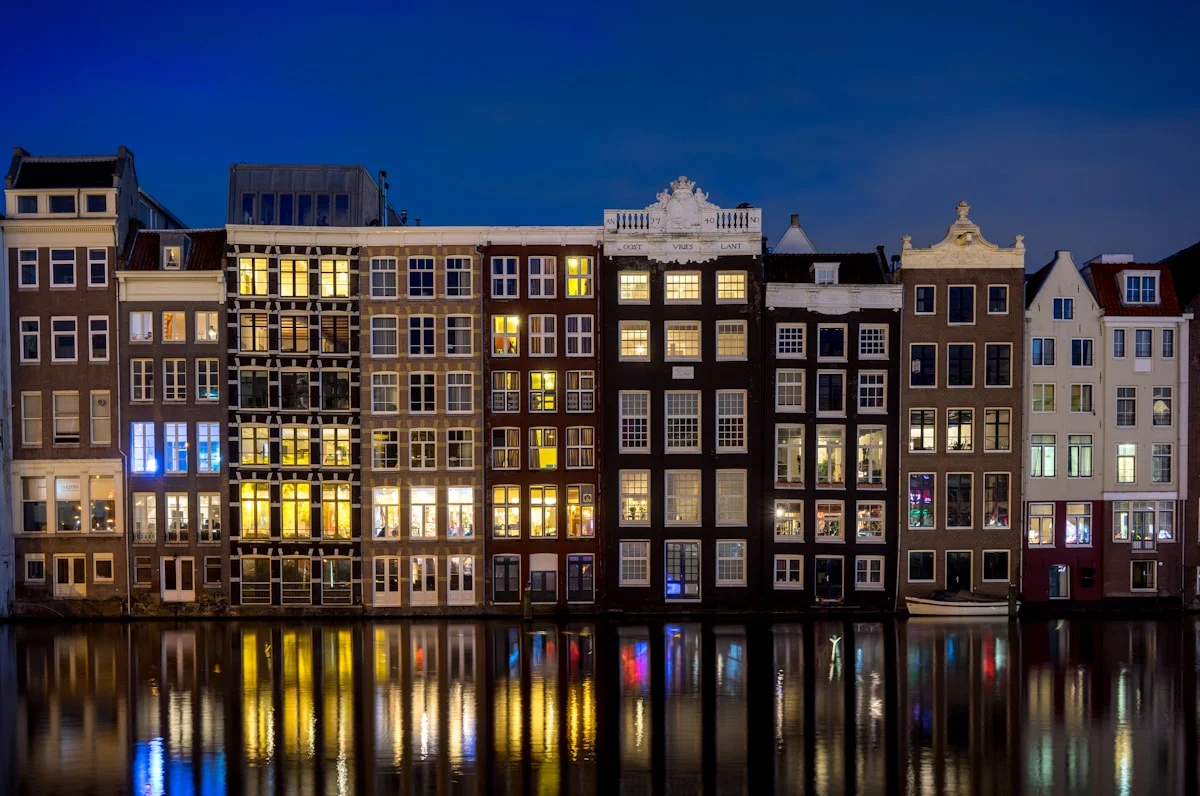
Some windows revealed bookshelves and dinner tables.
Others revealed people dancing alone.
One framed an elderly woman smoking silently beside a lamp.
For long stretches, the city became almost quiet except for bicycle chains rattling over bridges.
Then somewhere in the distance: glass breaking, laughter, a tram bell, silence again.
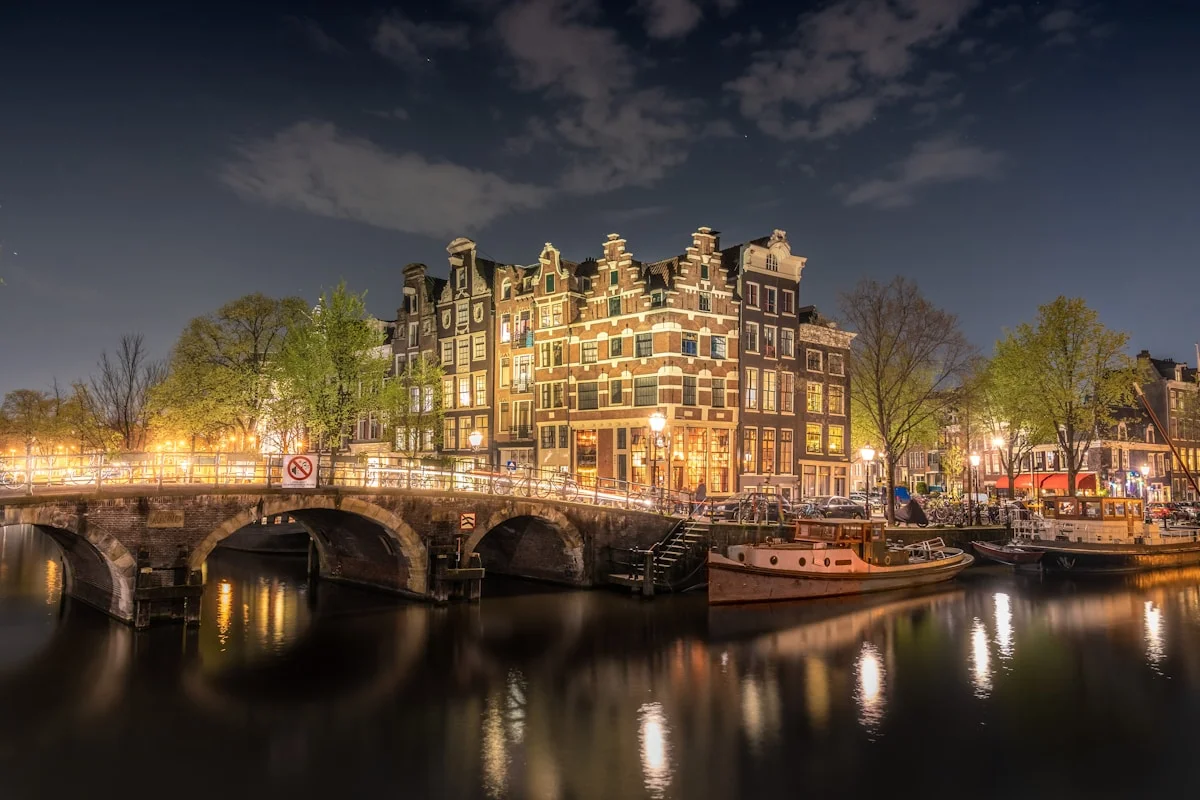
That was the moment Amsterdam finally stopped feeling like a destination and started feeling like a real place — messy, old, beautiful, tired, alive.
And honestly, that version of the city was far more interesting than the postcard one.
Comments
Leave a comment