
Across Andalusia: Palaces, Cathedrals, and White Villages
Some trips slowly fade into memory.
And then there are places like Andalusia — places that stay with you in fragments of light, stone, heat, and flowing water.
We based ourselves in Málaga and spent the trip driving across Andalusia one city at a time. Every morning we pointed the car in a different direction: Gibraltar, Córdoba, Ronda, Granada, Seville. One day — one more layer of history, architecture, and complete sensory overload.
At first, it sounded manageable.
By the end, we were surviving almost entirely on coffee, adrenaline, and the stubborn belief that sleep was less important than seeing one more cathedral.
The roads through Andalusia became part of the experience themselves. Olive groves rolled across the hills like dark green waves. White villages appeared on distant slopes, glowing beneath the spring sun. Old stone towers rose above the countryside while the Mediterranean occasionally flashed silver behind the mountains.
Even the drives between cities felt cinematic.
Gibraltar: Between Two Continents
The first morning we drove south.
The landscape slowly changed as the Rock appeared ahead of us above the sea — enormous, gray, and strangely unreal against the bright Mediterranean sky.
Gibraltar feels unlike anywhere else in Spain — for the fairly obvious reason that it isn’t Spain. Suddenly, there are British phone booths, English pubs, red mailboxes, and people casually speaking English while palm trees sway nearby beneath African winds coming across the strait.
We took the cable car to the top. From the viewing platform you can see the exact place where the Mediterranean meets the Atlantic, where Europe reaches toward Africa across a strip of water so narrow it feels almost accidental. The ancient Greeks called this one of the Pillars of Hercules — beyond this point, sailors refused to go for centuries, convinced the world simply ended here.
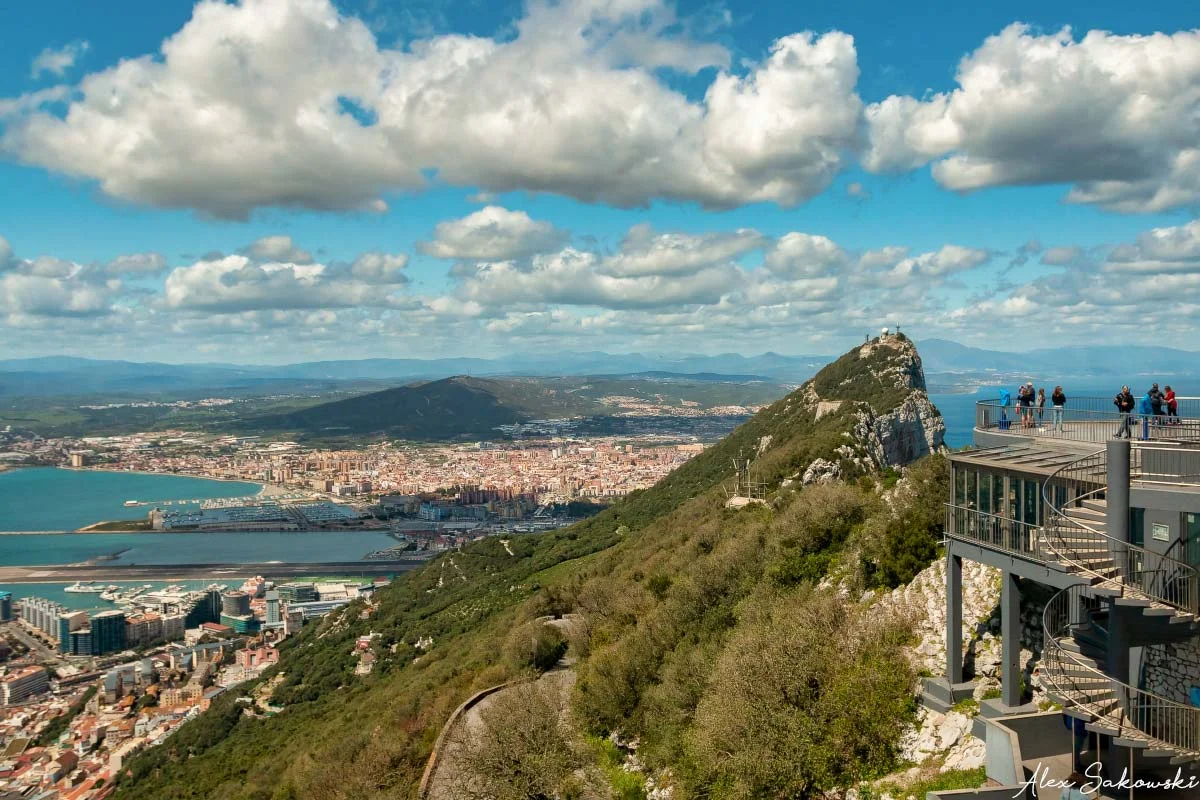
Standing near the top of the Rock, looking across the water toward the distant mountains of Morocco, Europe suddenly no longer felt entirely European. It felt like the edge of something larger.
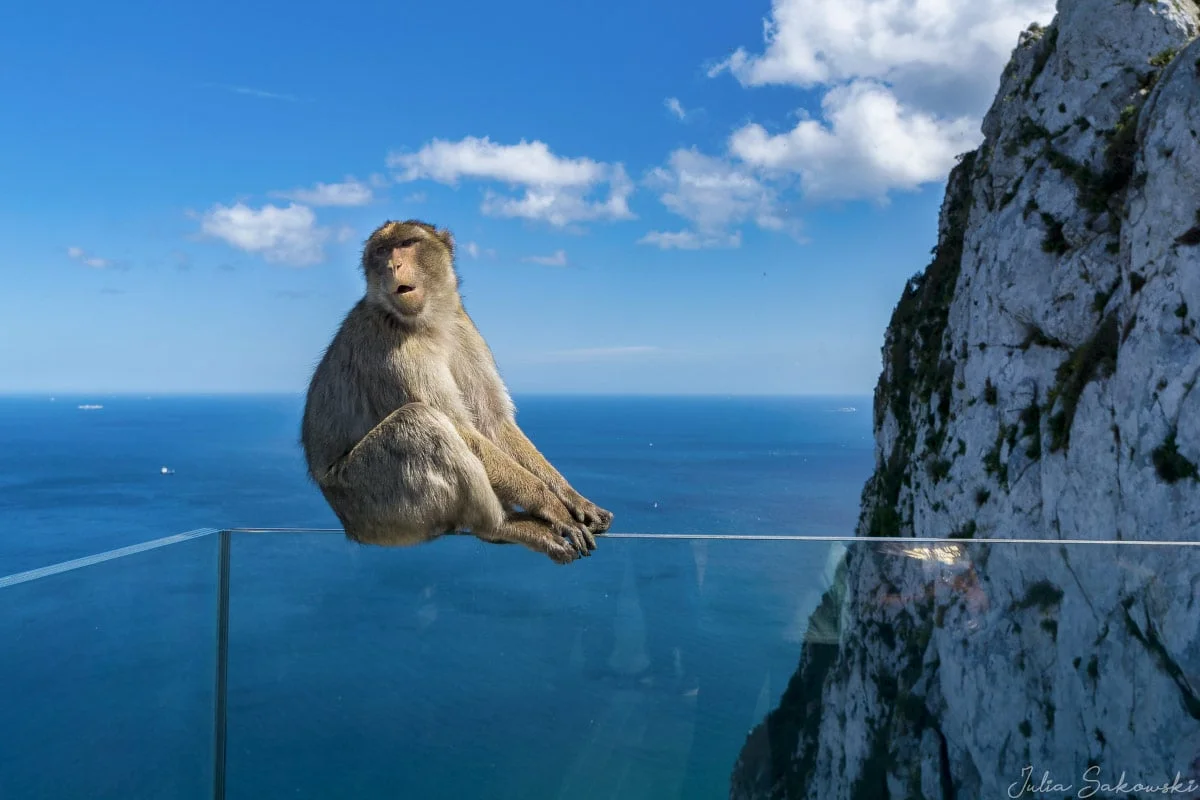
And of course, there were the monkeys.
Technically, Barbary macaques. In practice: furry professional thieves with absolutely no respect for personal space. Legend has it Gibraltar will remain British as long as even one monkey lives on the rock. The population is carefully monitored, which explains everything about their attitude.
Córdoba: The Hall of a Thousand Columns
Córdoba was anything but quiet.
By the time we reached the historic center, traffic had become chaotic enough that we were ready to celebrate any parking spot that technically qualified as legal. Eventually, we squeezed the car onto a tiny patch of sidewalk beneath a tree — a space so small I’m still not entirely convinced it was meant for parking at all.
Then we crossed the Roman bridge over the Guadalquivir, and suddenly the entire mood of the city changed.
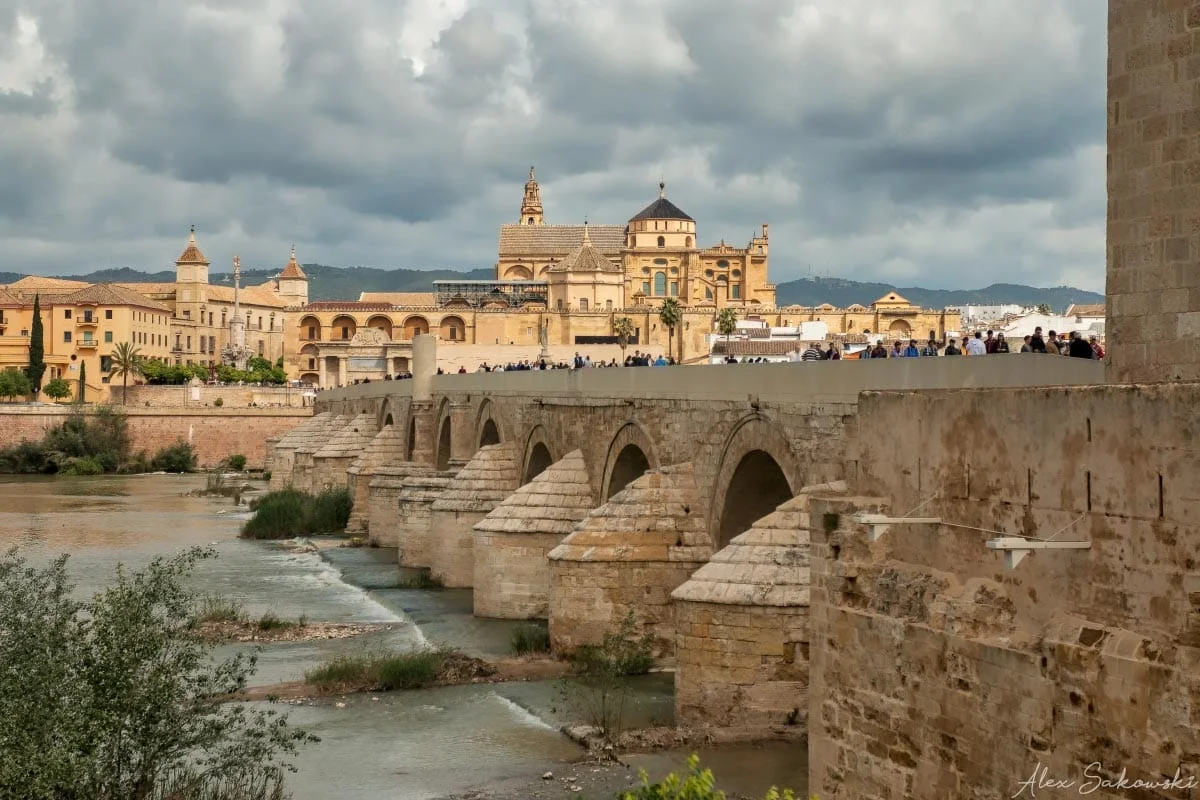
The noise faded behind us. Ahead rose the old city — once the capital of the Moorish caliphate and, at its peak, one of the greatest cities in Europe.
Even the air felt older somehow.
And then there was the Mezquita.
From the outside, it hardly prepares you for what waits inside.
Hundreds upon hundreds of red-and-white arches stretch in every direction, creating a hypnotic forest of columns beneath soft golden light. The scale becomes almost disorienting — like stepping into an Escher drawing where perspective quietly stops making sense. You can wander for an hour.
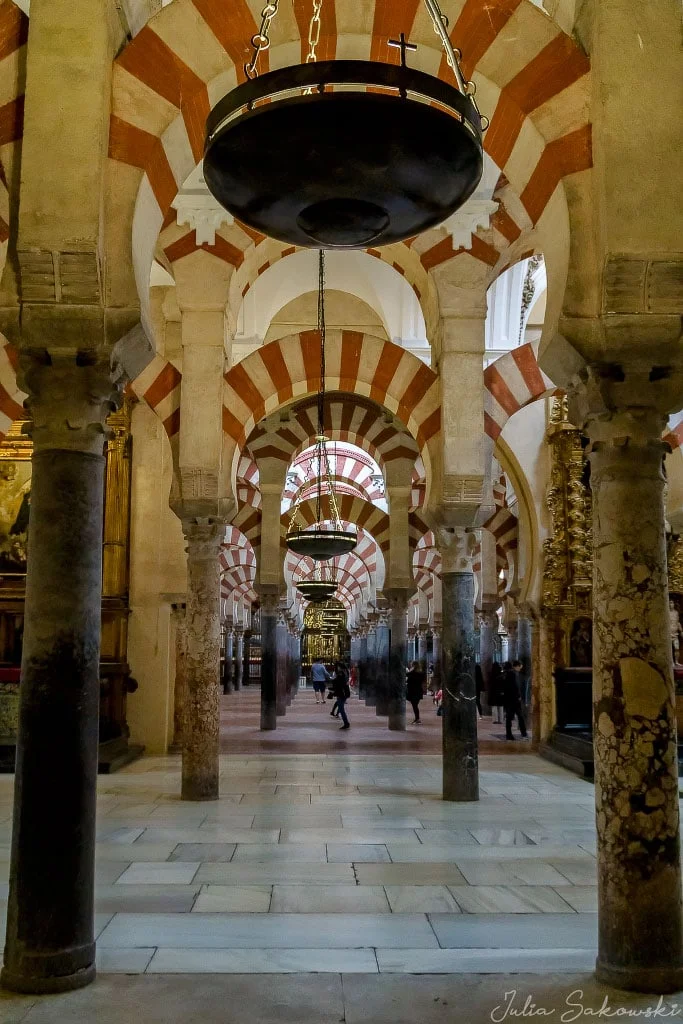
Hundreds upon hundreds of red-and-white arches stretch in every direction, forming a hypnotic forest of columns beneath soft golden light. The scale becomes almost disorienting — like stepping into an Escher drawing where perspective quietly stops making sense. You can wander for an hour and still feel lost.
The building does something strange to your sense of space. Every row of columns reveals another identical row behind it, repeating endlessly into shadow and light until the architecture stops feeling entirely real.
Then suddenly the columns part, the ceiling rises into a dome, and you find yourself standing inside an entirely different building: the Christian cathedral inserted directly into the heart of the ancient mosque after the Reconquista in 1236.
Two civilizations occupying the same space.
It should feel impossible.
Instead, somehow, it feels uniquely Spanish.
The White Villages: Arcos de la Frontera and Ronda
Andalusia's Pueblos Blancos — the White Villages — wrap around the green Sierra mountains like a string of pearls. Blinding white houses clinging to cliff edges, cascading into valleys. Most were built as fortresses along the old frontier between Christian and Moorish kingdoms, which is why so many names end in de la Frontera — "of the border."
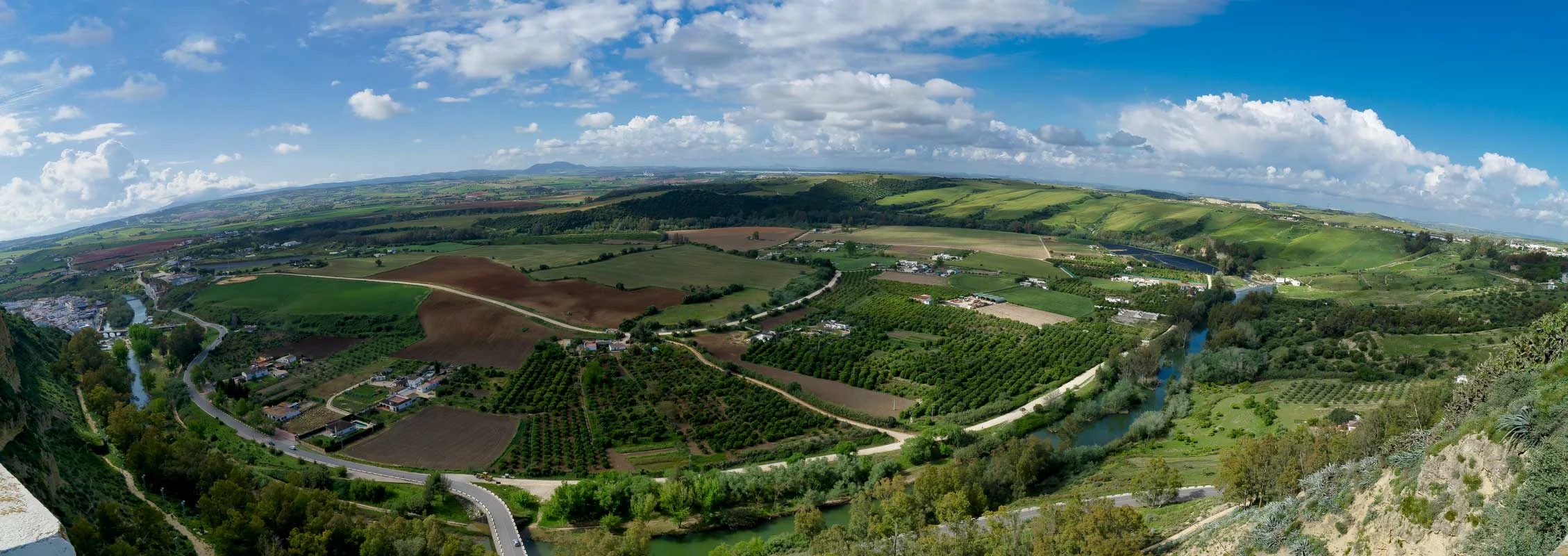
We stopped first in Arcos de la Frontera. Like many of these villages, it seems to grow directly out of the cliffs themselves. We left the car at the bottom and climbed to the central plaza, where the town opens suddenly onto an enormous green valley threaded with the blue ribbon of the Guadalete river.
Then we got lost in the maze of cobblestone streets — lanes so narrow the houses on either side are connected by arches overhead. No crowds. No noise. Just our own footsteps and the occasional cat watching from a doorstep.
Then we got lost in the maze of cobblestone streets — lanes so narrow the houses on either side are connected by arches overhead. No crowds. No noise. Just our own footsteps and the occasional cat watching from a doorstep.
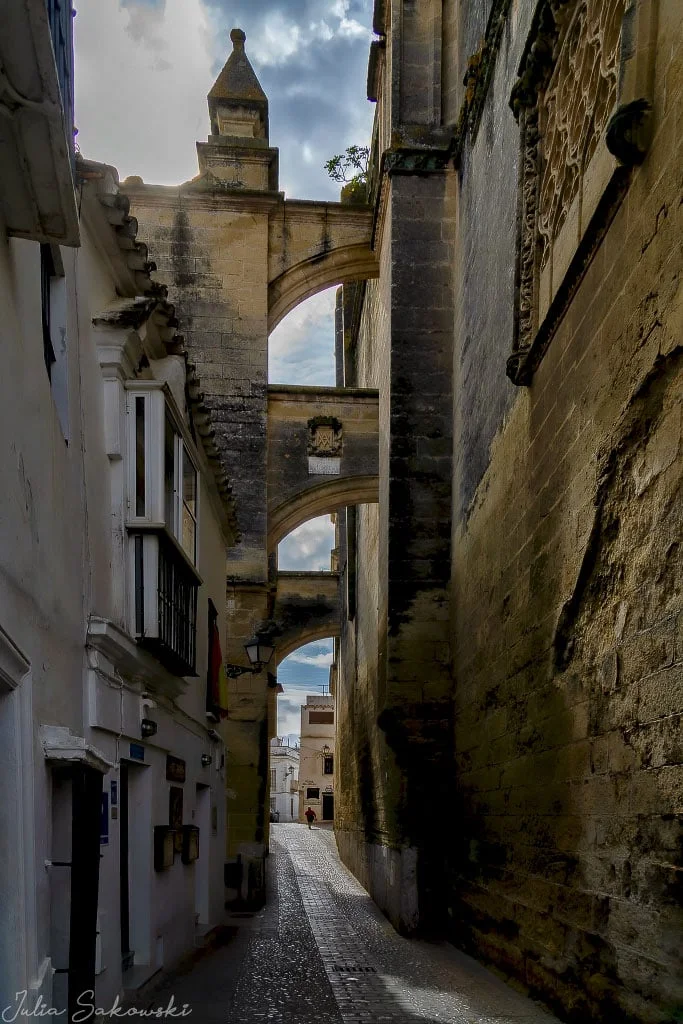
The entire town felt suspended somewhere between sky and earth.
Then came Ronda.
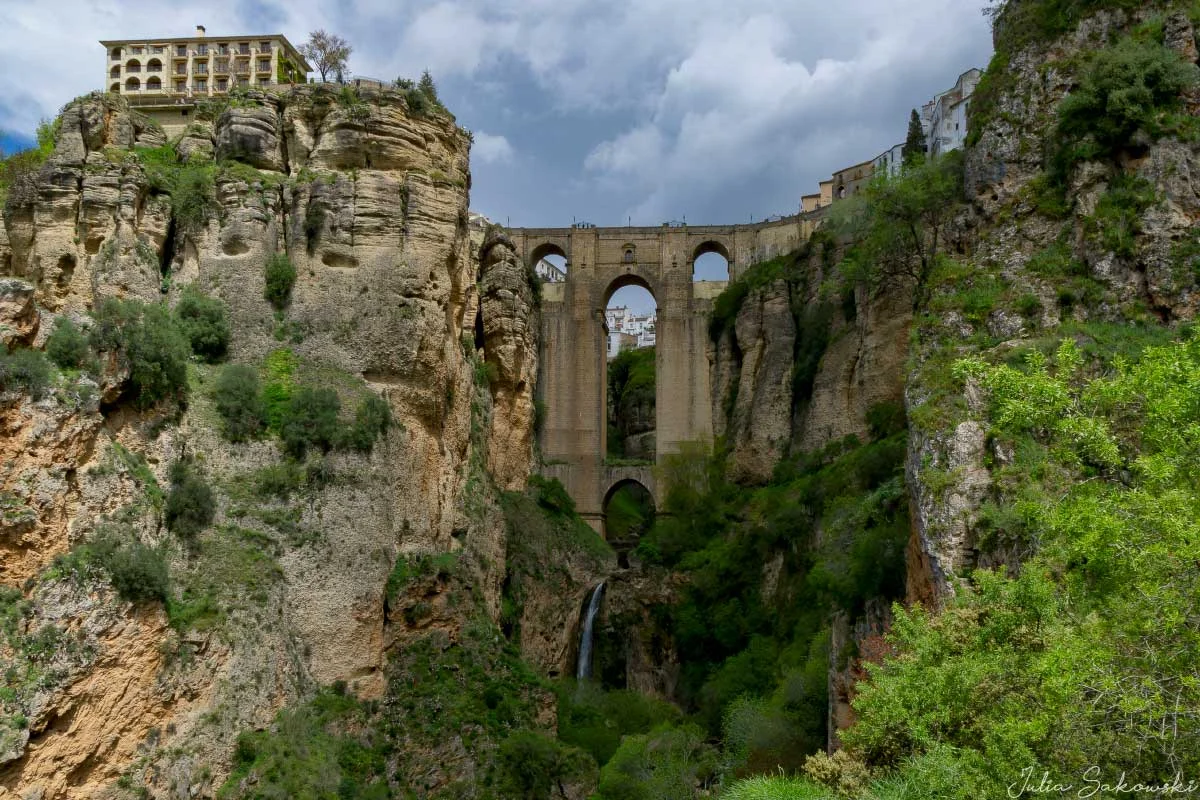
The city itself already looks dramatic enough, balanced above a massive gorge split by the famous Puente Nuevo bridge.
And naturally, simply viewing the famous bridge from above was not enough. We wanted to reach the bottom of the gorge.
That decision eventually led us onto an extremely narrow farm road twisting down the hillside somewhere far outside the tourist areas.
The road became tighter and tighter.
Stone walls. Sharp turns. Tiny farms. Dust. No guardrails. At one point, we crossed a ridiculously narrow little bridge where I honestly wasn’t entirely convinced the car would fit.
Or survive.
Or both.
But somehow we kept going.
And eventually, standing at the bottom of the gorge and looking up at the enormous stone bridge hanging above the cliffs, the entire ridiculous drive suddenly felt worth it.
Granada
Granada came late in the journey.
By then, we thought we understood Andalusia.
Cathedrals. Palaces. Ancient streets. Roman ruins. Endless beauty layered across centuries.
We thought we were prepared.
Granada disagreed.
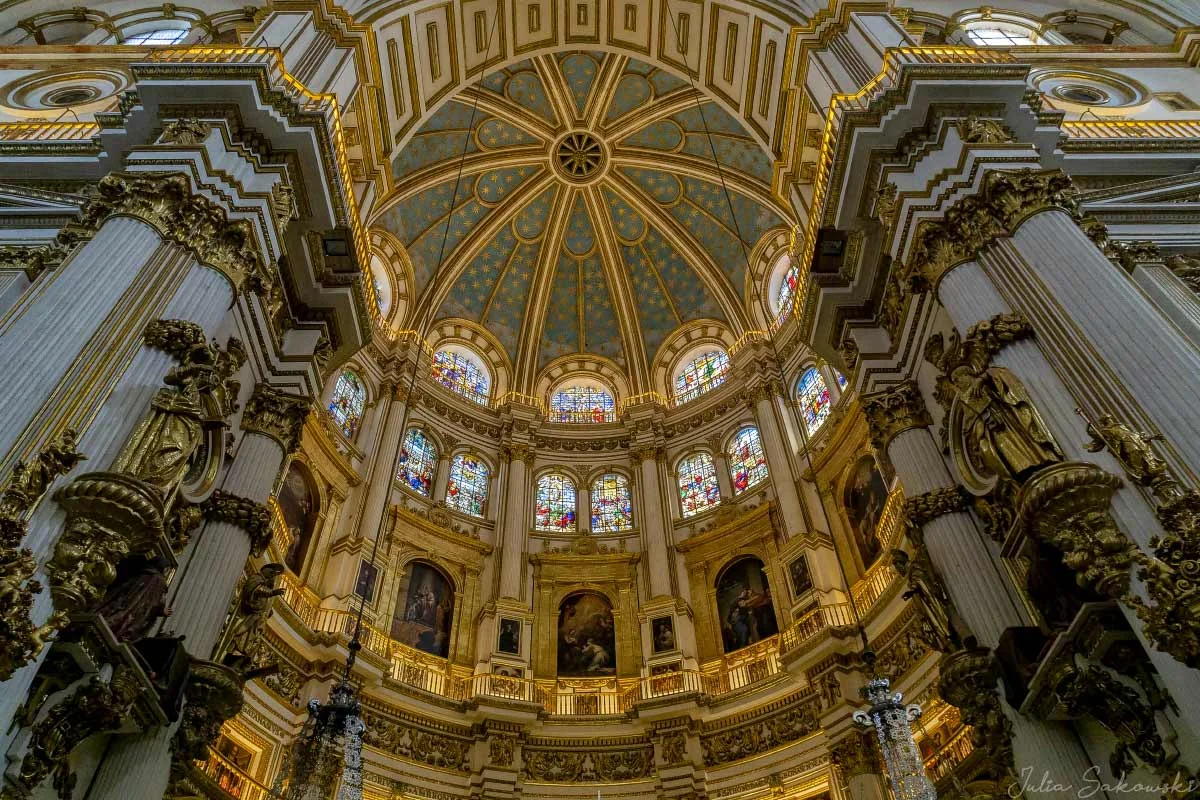
The Cathedral alone felt overwhelming.
White columns soared upward into shadow and light, so tall they distorted all sense of scale. Gothic structure wrapped in Renaissance ambition. Gold everywhere. Chapels unfolding one after another beneath impossible ceilings.
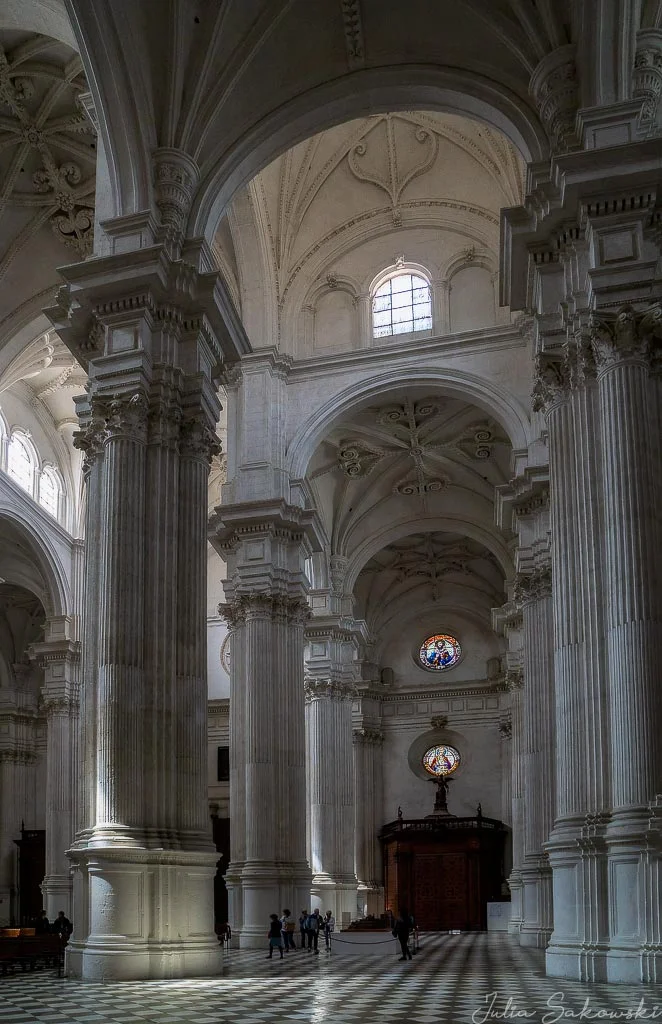
The building did not whisper.
It proclaimed victory.
A civilization reclaiming the city after seven centuries of Moorish rule — and making certain nobody would forget it.
Only a few days later did we realize we had completely missed the Royal Chapel beside it.
At the time, our minds were full. Too much beauty. Too much history. We walked out convinced we had seen everything.
And somehow, the day was only half over.
Because after lunch came the Alhambra.
Photographs help.
History books help.
Neither prepares you for the real thing.
The Alhambra feels less like architecture and more like a dream someone managed to preserve in stone. Walls covered in carvings so intricate they resemble lace. Arches are impossibly light. Arabic calligraphy flows endlessly across plaster and marble.
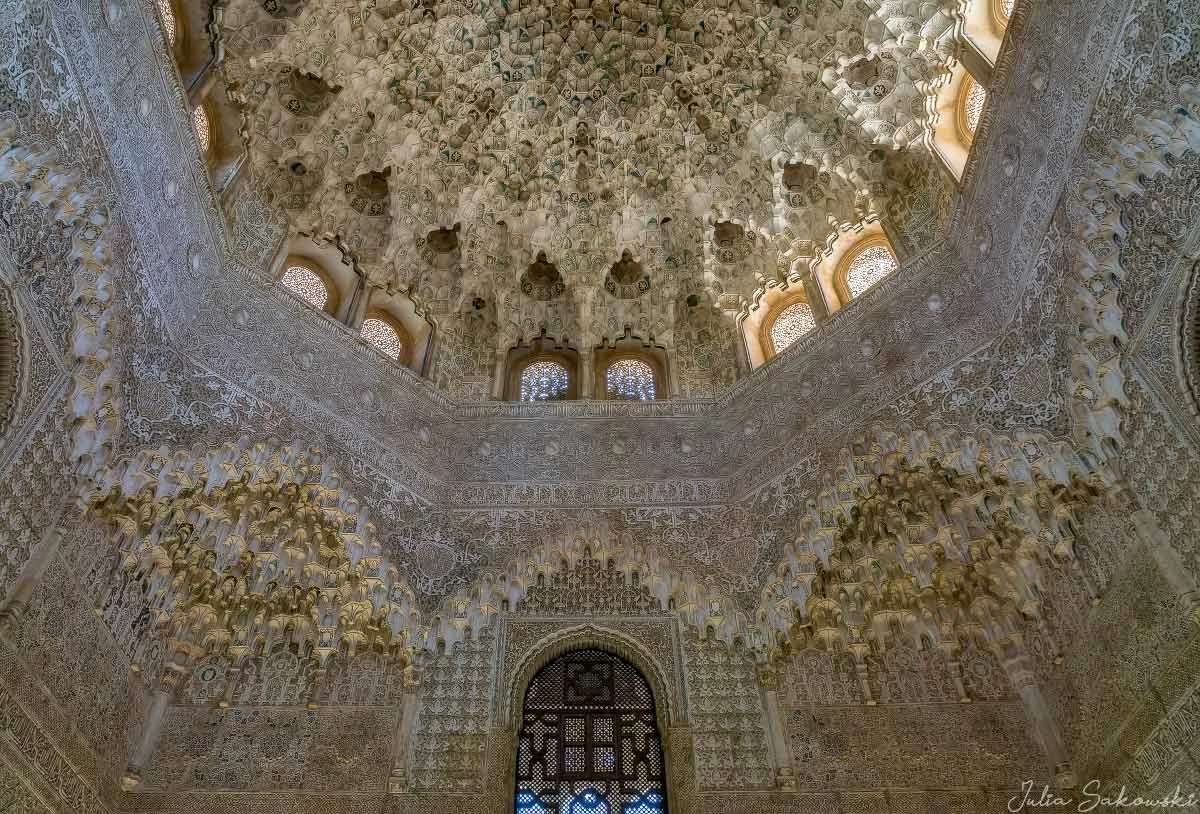
Nothing feels heavy.
Everything feels suspended.
In the Court of the Lions, the thin forest of columns seemed almost unreal beneath the afternoon sun.
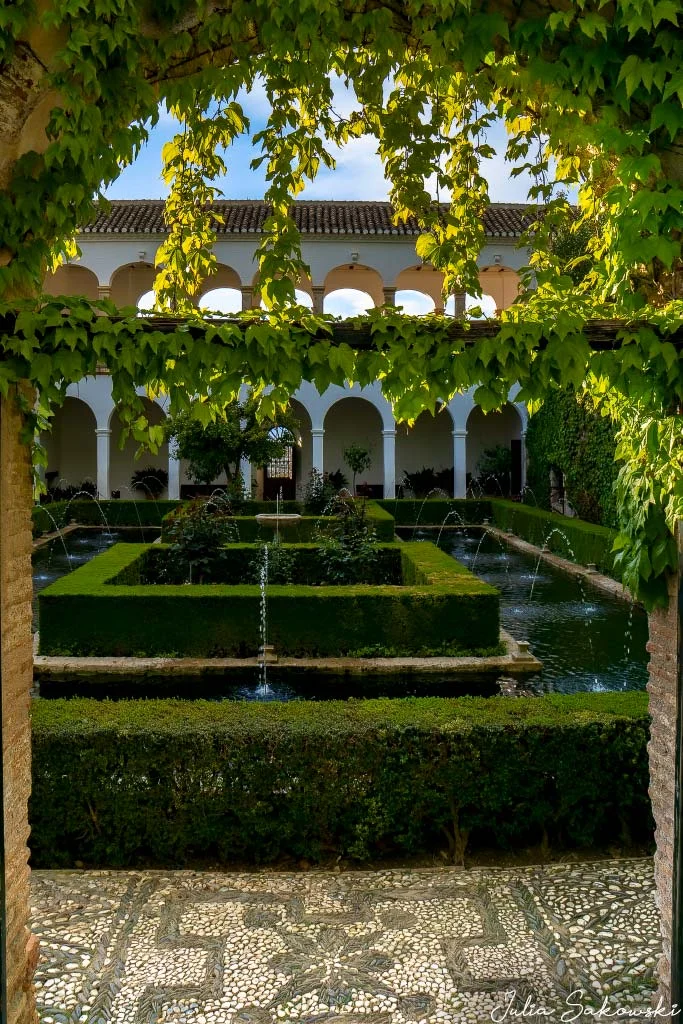
And everywhere, there was water.
Not silence.
Water.
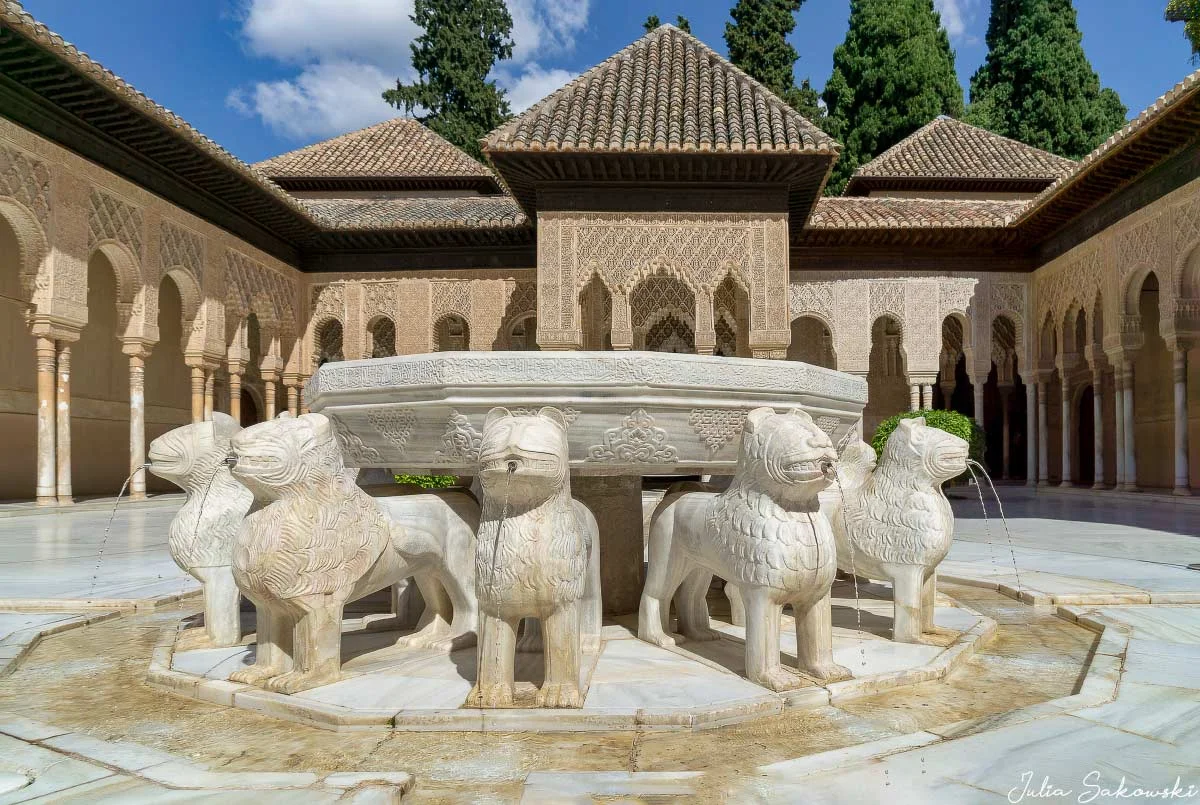
Fountains echoing softly through courtyards. Narrow channels cutting through stone. Pools reflecting fragments of sky. Hidden streams move quietly through the gardens.
At sunset, exhausted but unwilling to leave, we took a taxi up into the Albaicín. From the hilltop, the Alhambra glowed across the valley in deep orange light.
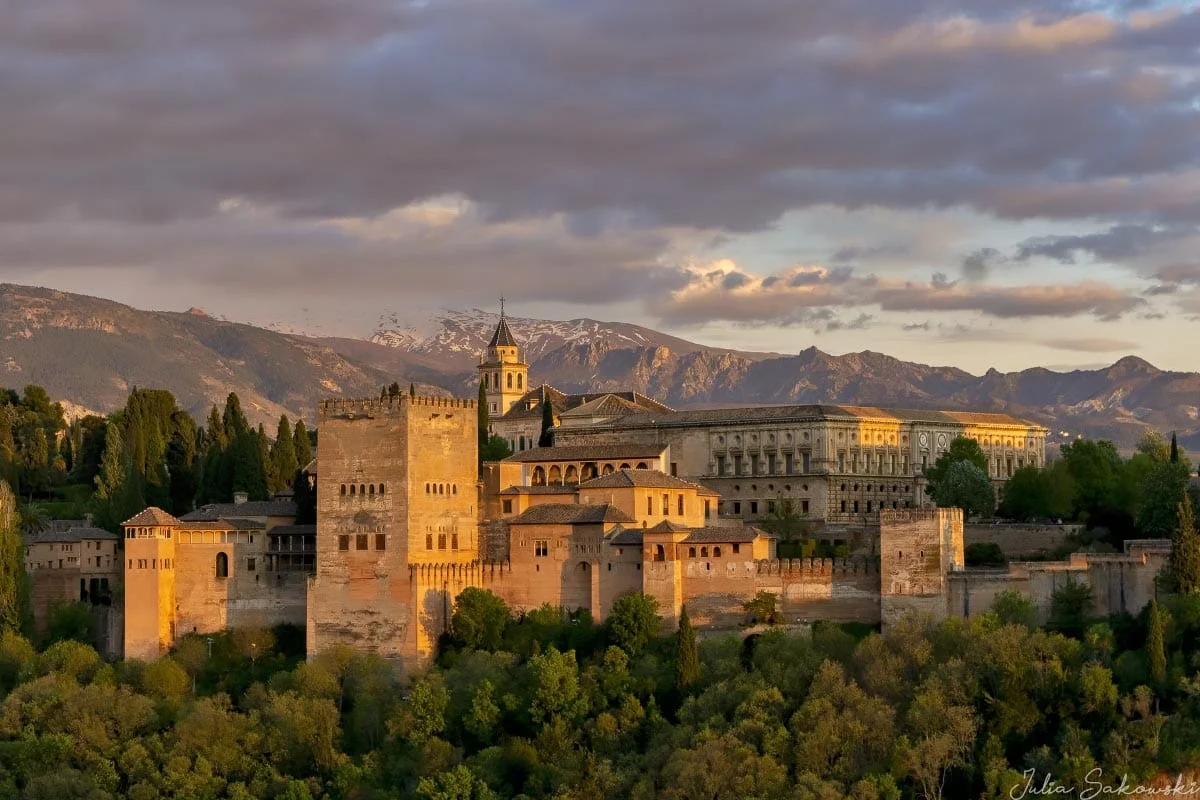
None of the photographs fully captured it.
But I kept trying anyway.
Seville
The previous night had stretched long past sunset — dinner overlooking the glowing Alhambra and far too many photographs in the fading light. We returned to Málaga very late, still half lost somewhere inside Granada.
So the next morning, somewhere between coffee and the drive to Seville, the Alcázar tickets stayed behind.
We realized it only after arriving.
Ahead stood a massive queue slowly melting beneath the Andalusian sun. For a while, it genuinely looked like we might miss the palace entirely.
Then, somehow, at the very last moment, we managed to join a tour group and slip inside.
And instantly, none of it mattered anymore.
The Alcázar
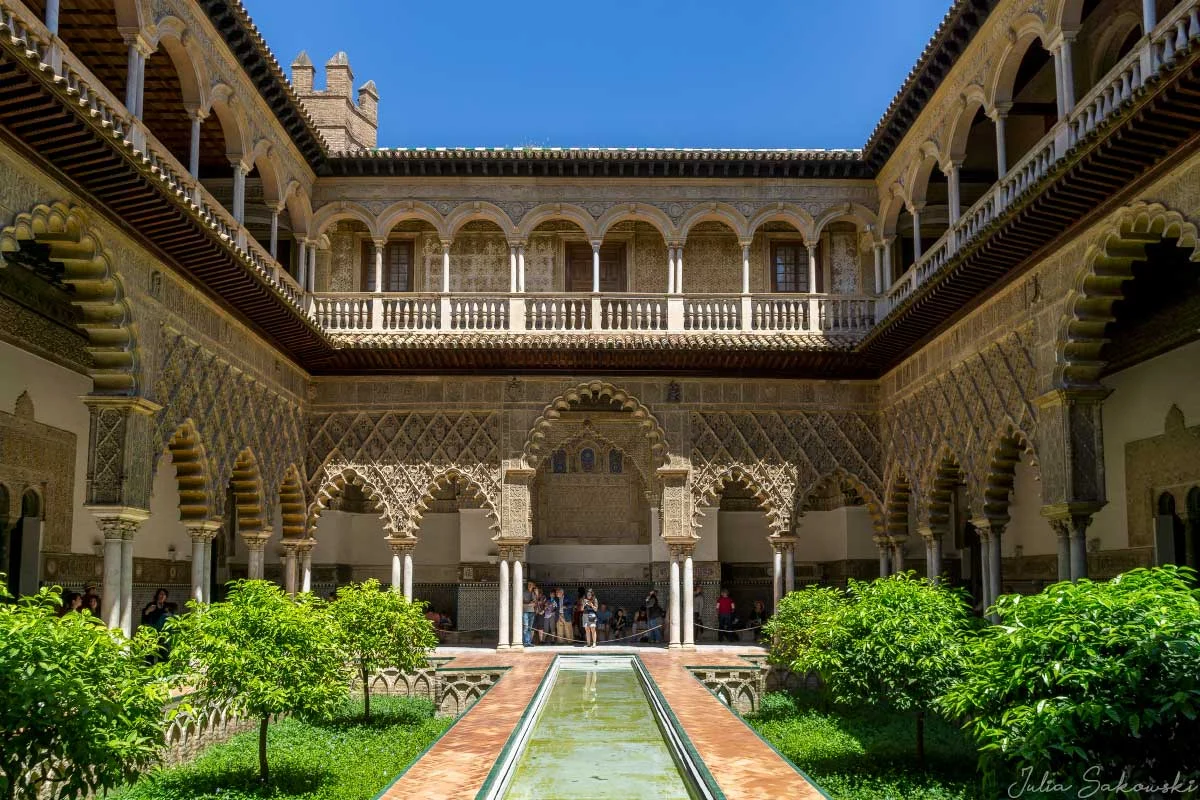
The Alcázar feels less like a palace and more like a competition between architects trying to outdo each other across centuries. You enter through the narrow Lion Gate — a dark stone arch that feels exactly like a portal through time. The 21st century stays behind you.
Ahead: sunlit courtyards, carved horseshoe arches, geometric tilework, reflecting pools, and ceilings so ornate they make you dizzy. Moorish architecture wound together with Gothic vaulted halls and Renaissance details — a style called mudéjar, where two civilizations became so intertwined you stop trying to separate them.
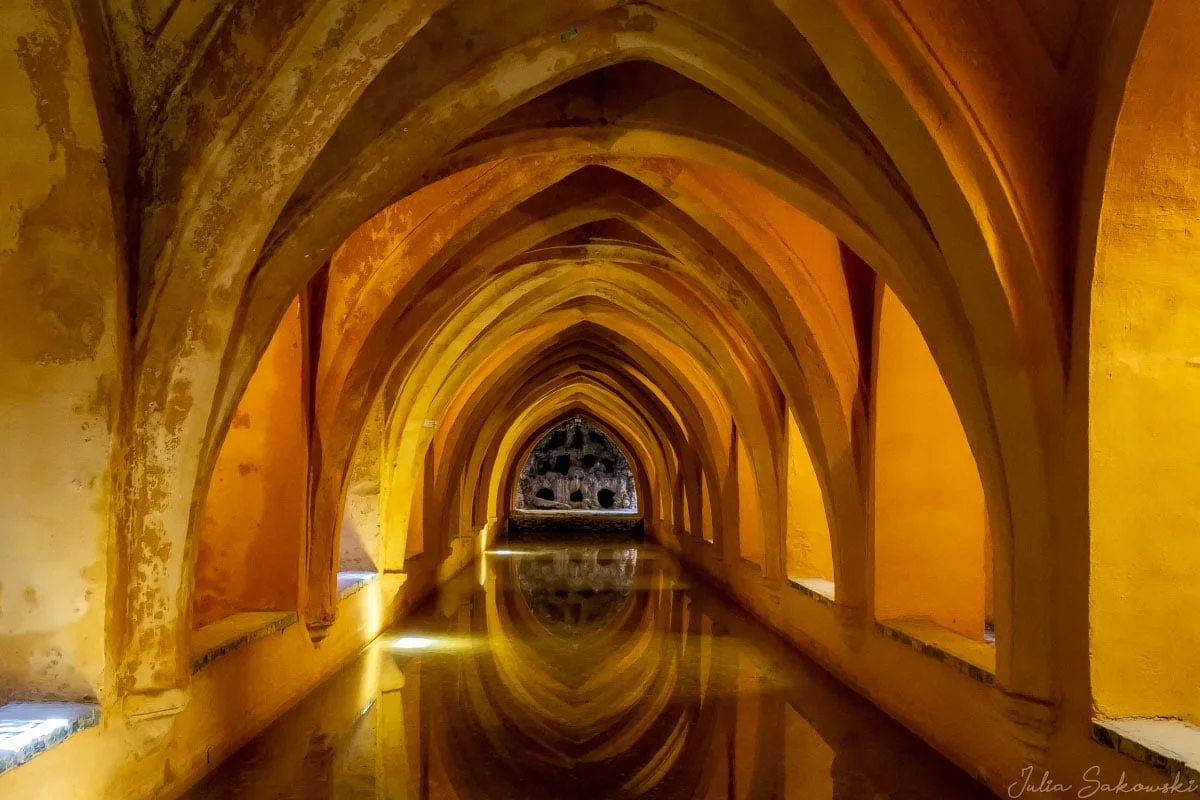
Beneath the palace, ancient cisterns once collected rainwater. They bear the surprisingly romantic name Baths of Lady Mary of Padilla — dark, cool, and completely still.
The Cathedral
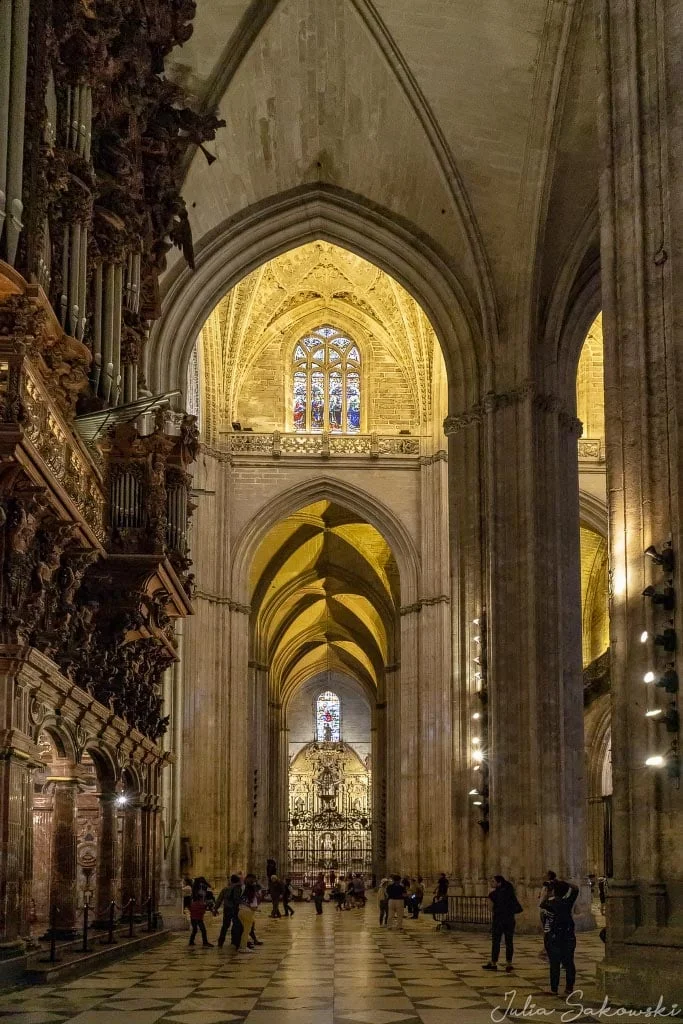
Seville's Cathedral is not a church in any ordinary sense.
One of the largest cathedrals in the world. The largest Gothic church ever built. The people who commissioned it reportedly said they wanted future generations to think them mad. Mission accomplished — in the best possible way.
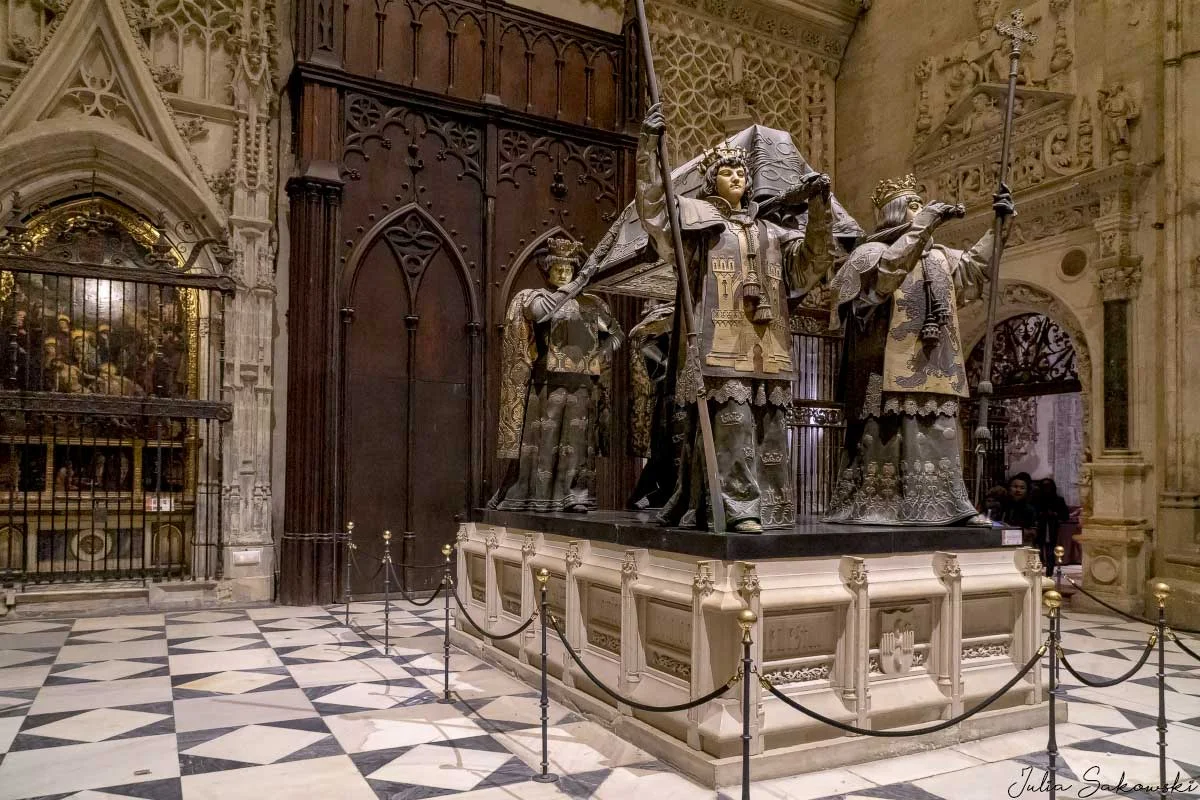
It also holds the tomb of Christopher Columbus. Four kings — representing Aragón, Castile, León, and Navarre — carry his sarcophagus on their shoulders forever. The man who changed the shape of the known world, carried by the kingdoms that sent him.
Plaza de España
By late afternoon, we wandered toward the Plaza de España.
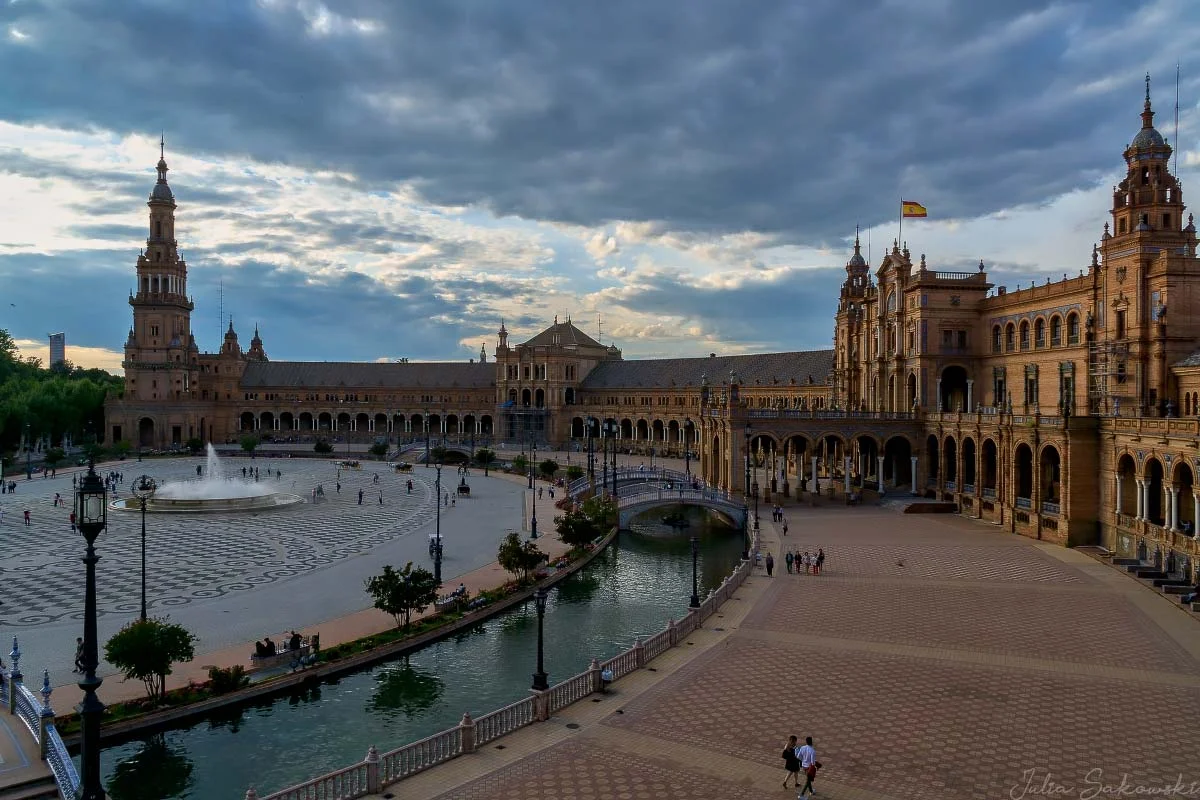
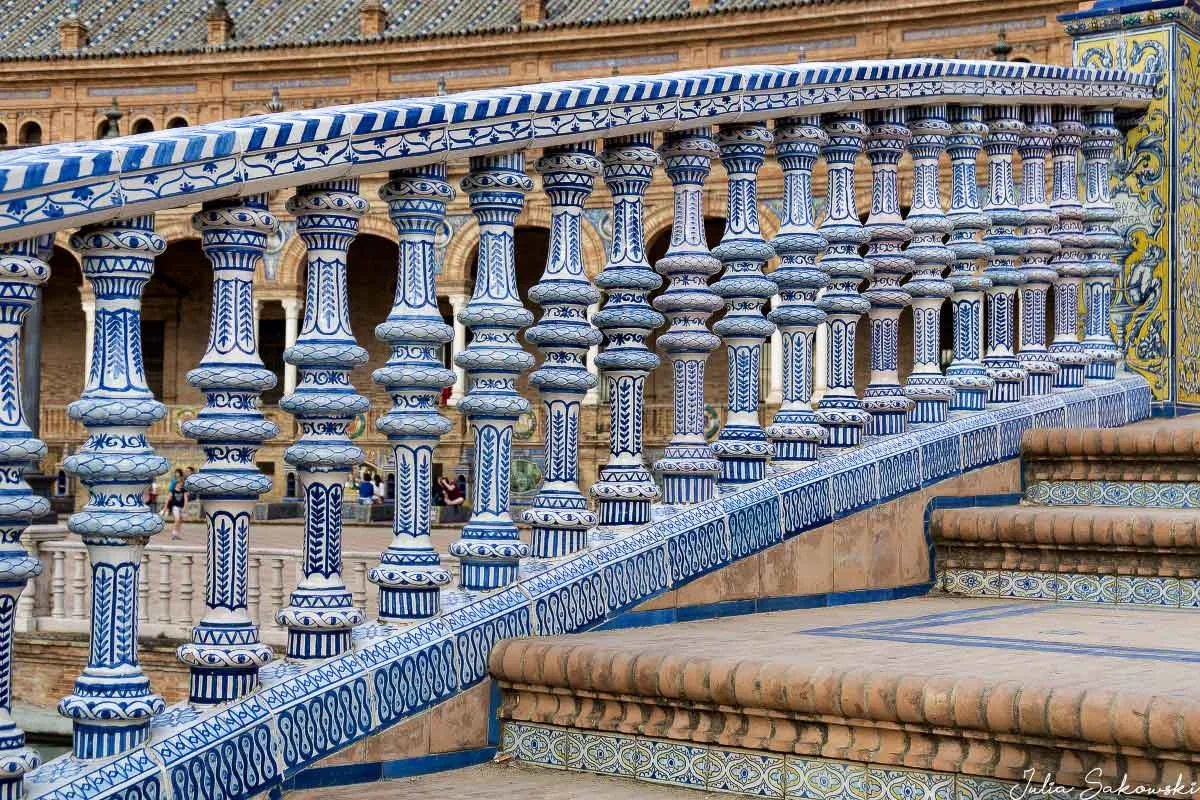
Built in 1928 for the Ibero-American Exhibition, and later used as a film set for the Naboo scenes in Star Wars: Attack of the Clones, which, once you see it, makes complete sense. A sweeping semicircle of golden-pink buildings surrounding a canal with arching bridges and a central fountain. Monumental from a distance, and something else entirely up close — every surface covered in hand-painted tiles, blue and yellow patterns representing each of Spain's provinces.
Seville itself felt alive in a way that was different from everywhere else. Hotter. Louder. More theatrical. Horse carriages rattling through the streets. Orange trees lining the plazas. Restaurants were overflowing late into the evening as if nobody had work the next morning.
Maybe nobody did.
Spain sometimes gives that impression.
By the end of the trip, the days had started blending into one long sequence of palaces, cathedrals, mountain roads, sculptures, towers, courtyards, and late dinners.
And yet every city felt completely different.
Gibraltar felt like the edge of the world.
Córdoba felt ancient.
Ronda felt dangerous.
Granada felt dreamlike.
Seville felt alive.
By the time we finally returned to Málaga for the last evening, we were exhausted, sunburned, carrying thousands of photographs, and already talking about coming back someday.
Because Andalusia doesn't really feel like a place you finish exploring.
It feels like a place that quietly waits for your return.
Comments
Leave a comment